English
 Español
 tiếng việt
 русский
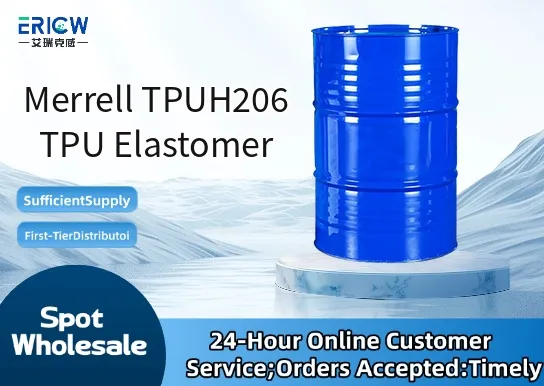
Excellent abrasion and wear resistance for demanding dynamic applications.
Outstanding low-temperature flexibility down to –30 °C.
Good oil, grease, and hydrocarbon resistance.
High tensile strength and elongation at break for robust mechanical performance.
Processable via extrusion, injection molding, and calendering with consistent melt stability.
Automotive interior trim and soft-touch overlays.
Industrial hoses and pneumatic tubing requiring flex fatigue resistance.
High-performance footwear midsoles and outsoles.
Consumer electronics protective casings and gasketing components.
Medical device tubing and non-implantable wearable components.
| Chemical Type | Thermoplastic Polyurethane (Aliphatic Polyester-based) |
| Product Form | Pellets |
| Appearance | Off-white to light beige, free-flowing granules |
| Density (g/cm³) | 1.18–1.20 |
| Melt Flow Index (210 °C/2.16 kg, g/10 min) | 10–14 |
| Shore A Hardness | 85–87 |
| Tensile Strength (MPa) | 38–42 |
| Elongation at Break (%) | 550–620 |
Q1: What are the key processing advantages of Merrell TPUH206 compared to conventional TPU grades?
A: Merrell TPUH206 offers enhanced melt flow and reduced viscosity at standard extrusion and injection molding temperatures, enabling smoother processing in thin-wall applications and complex geometries. Its balanced thermal stability supports consistent output without premature degradation during extended residence times.
Q2: Is Merrell TPUH206 suitable for flexible packaging or film applications requiring clarity and toughness?
A: Yes — it delivers excellent optical clarity, high tensile strength, and outstanding puncture resistance, making it well-suited for high-performance flexible packaging films, especially where seal integrity and low-temperature flexibility are critical. Compatibility with co-extrusion and lamination processes has been demonstrated in industrial trials.
Q3: How does Merrell TPUH206 perform in dynamic mechanical applications, such as rollers or drive belts?
A: It exhibits superior abrasion resistance, low compression set, and stable elastic recovery under repeated flexing or cyclic loading — characteristics that support long service life in demanding dynamic components like precision rollers, conveyor belts, and sealing elements.
Q4: Can Merrell TPUH206 be blended with other polymers to modify hardness or processability?
A: Yes — it shows good compatibility with selected polyesters, polyethers, and certain thermoplastic elastomers when properly dried and processed. Blending is typically used to fine-tune hardness, elongation, or low-temperature performance, though formulation optimization is recommended to ensure phase stability and mechanical balance.
Contact With Us:
E-mail: wangxingqiang@ericwchem.com
Have a Questions? Call Us:
Add:
Building A1, Jiete Industrial Park, Huangpu District, Guangzhou City, Guangdong Province, China