English
 Español
 tiếng việt
 русский
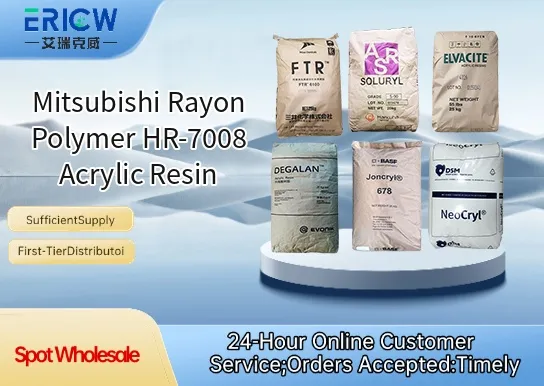
High transparency with excellent UV resistance for long-term optical stability.
Outstanding weatherability and color retention under prolonged outdoor exposure.
Good compatibility with common solvent-based coating systems and crosslinkers.
Low viscosity in solution, enabling easy handling and high-solids formulation flexibility.
Consistent batch-to-batch reproducibility meeting stringent industrial quality standards.
Automotive clearcoats and OEM topcoats requiring gloss and durability.
Architectural coatings for façades, window frames, and aluminum composite panels.
Industrial maintenance coatings for metal substrates in harsh environments.
Plastic coatings for ABS, PC, and PP substrates requiring adhesion and clarity.
UV-curable hybrid systems where acrylic backbone enhances film integrity.
| Chemical Type | Solution-grade methyl methacrylate / butyl acrylate copolymer |
| Product Form | Clear liquid in organic solvent (e.g., xylene/toluene blend) |
| Appearance | Colorless to pale yellow, transparent liquid |
| Non-Volatile Content (NV%) | 45–50% (by weight, 120°C, 60 min) |
| Gardner Color | ≤3 |
| Acid Value | 2–6 mg KOH/g |
| Viscosity (25°C, #4 spindle, 20 rpm) | 800–1,200 cP |
| Primary Applications | High-performance solventborne clearcoats and industrial topcoats |
Q1: What is the primary function of HR-7008 in coating formulations?
A: HR-7008 is a solution-grade acrylic resin designed to serve as a film-forming binder and rheology modifier in solvent-based industrial coatings, offering balanced hardness, flexibility, and gloss retention.
Q2: Is HR-7008 compatible with common crosslinkers used in thermosetting systems?
A: Yes, HR-7008 contains hydroxyl functionality and is formulated for compatibility with standard amino resins (e.g., melamine-formaldehyde) and polyisocyanates in baked or ambient-cure systems.
Q3: How does HR-7008 perform in terms of weather resistance and UV stability?
A: As a pure acrylic polymer without aromatic monomers, HR-7008 provides inherently good resistance to UV degradation, chalking, and color shift—making it suitable for exterior-facing industrial and automotive topcoats.
Q4: What solvents are recommended for diluting HR-7008?
A: HR-7008 is typically supplied in aromatic or ketone-based solvents and is readily soluble in xylene, toluene, MEK, MIBK, and ester solvents—compatibility should be verified during formulation development.
Q5: Can HR-7008 be used in low-VOC formulations?
A: While HR-7008 itself is solvent-borne, it can contribute to VOC-reduction strategies when paired with high-solids resins or reactive diluents, and its efficient film formation allows for potential reductions in overall solvent demand.
Contact With Us:
E-mail: wangxingqiang@ericwchem.com
Have a Questions? Call Us:
Add:
Building A1, Jiete Industrial Park, Huangpu District, Guangzhou City, Guangdong Province, China