English
 Español
 tiếng việt
 русский
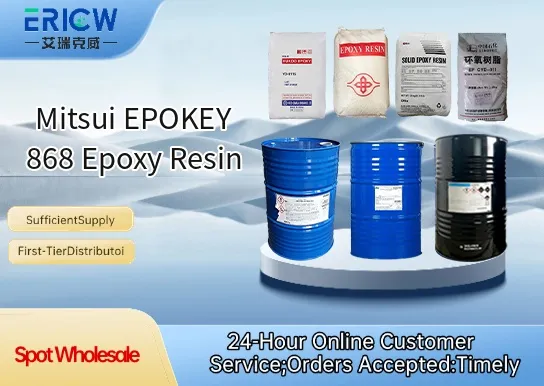
High-purity bisphenol-A based liquid epoxy resin with low chlorine content.
Excellent compatibility with standard amine and anhydride curing agents.
Superior electrical insulation properties and thermal stability up to 130 °C.
Low viscosity (12,000–14,000 mPa·s at 25 °C) enabling easy processing and impregnation.
Consistent batch-to-batch quality meeting strict JIS K 6911 and ISO 9001 requirements.
Electrical insulation systems for medium-voltage motors and generators.
Encapsulation and potting of power electronics and IGBT modules.
Winding impregnation resins for industrial transformers and reactors.
Structural adhesives in high-reliability aerospace and rail traction components.
Base resin for flame-retardant composite laminates (when formulated with ATH or phosphorus additives).
| Chemical Type | Bisphenol-A diglycidyl ether (DGEBA) |
| Product Form | Clear, pale yellow liquid |
| Appearance | Transparent, slightly viscous liquid, free from gel particles or haze |
| Epoxy Equivalent Weight (EEW) | 187–193 g/eq |
| Viscosity (25 °C) | 12,000–14,000 mPa·s |
| Chloride Content | ≤ 500 ppm |
| Softening Point | 12–16 °C |
| Primary Applications | Electrical insulation, encapsulation, impregnation, structural composites |
Q1: What is the primary function of EPOKEY 868 in epoxy formulations?
A: EPOKEY 868 functions as a reactive diluent and viscosity modifier, enabling improved processability—especially in casting, coating, and adhesive applications—while maintaining good crosslink density and thermal stability after curing.
Q2: Is EPOKEY 868 compatible with common amine-based hardeners?
A: Yes, EPOKEY 868 exhibits broad compatibility with aliphatic, cycloaliphatic, and aromatic amines, as well as anhydride curing agents, supporting flexible formulation design for diverse performance targets.
Q3: How does EPOKEY 868 compare to traditional glycidyl ether diluents in terms of reactivity and final properties?
A: Compared to conventional mono-functional glycidyl ethers, EPOKEY 868 offers higher functionality and lower volatility, contributing to reduced shrinkage, enhanced chemical resistance, and better retention of mechanical integrity in the cured network.
Q4: Can EPOKEY 868 be used in food-contact or potable water applications?
A: EPOKEY 868 is not pre-qualified for direct food-contact or potable water use; regulatory compliance must be evaluated on a case-by-case basis by the end-formulator, considering full system composition, cure conditions, and applicable regional requirements.
Q5: What handling precautions are recommended during storage and processing?
A: Store in tightly sealed containers under dry, cool conditions away from moisture and strong oxidizing agents. Use appropriate personal protective equipment (PPE), including gloves and eye protection, as EPOKEY 868 may cause skin sensitization with repeated or prolonged exposure.
Contact With Us:
E-mail: wangxingqiang@ericwchem.com
Have a Questions? Call Us:
Add:
Building A1, Jiete Industrial Park, Huangpu District, Guangzhou City, Guangdong Province, China