English
 Español
 tiếng việt
 русский
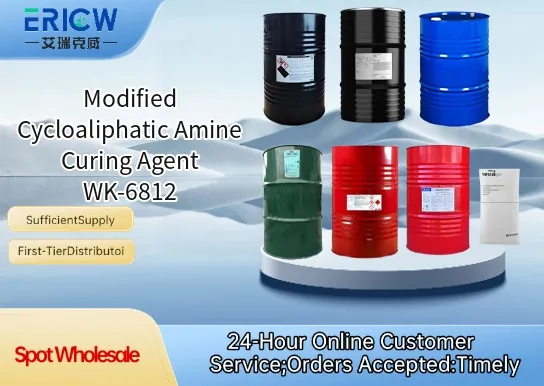
Enhanced pot life compared to standard cycloaliphatic amines, enabling extended processing windows for large-scale composite layups.
Improved low-temperature reactivity—cures effectively at temperatures as low as 10 °C without external accelerators.
Reduced volatility and amine blush tendency, supporting superior surface quality and intercoat adhesion in humid environments.
Excellent compatibility with standard epoxy resins (e.g., DGEBA, novolacs) and low-viscosity diluents.
Good chemical resistance post-cure, particularly against alkalis and aliphatic hydrocarbons.
High-performance wind turbine blade structural adhesives and matrix resins.
Electrical encapsulation and potting compounds for medium-voltage transformers and insulators.
Marine-grade protective coatings requiring rapid turnaround and humidity tolerance.
Carbon fiber reinforced polymer (CFRP) tooling and mold-making systems.
Industrial flooring systems demanding fast return-to-service and abrasion resistance.
| Chemical Type | Modified cycloaliphatic amine |
| Product Form | Liquid |
| Appearance | Pale yellow to amber clear liquid |
| Primary Applications | Epoxy resin curing agent for composites, coatings, adhesives, and encapsulants |
| Key Features | Low volatility, reduced amine blush, low-temperature cure capability, extended pot life |
| Benefits | Improved worker safety, better surface finish, enhanced process flexibility, reliable performance in variable ambient conditions |
| Density (25 °C) | ~0.92–0.95 g/cm³ |
| Amine Value | 380–420 mg KOH/g |
Q1: What are the key advantages of WK-6812 compared to conventional aliphatic or aromatic amine curing agents?
A: WK-6812 offers an optimized balance of low viscosity, extended pot life, and rapid ambient-temperature cure—without sacrificing final hardness, chemical resistance, or thermal stability. Its modified cycloaliphatic structure reduces volatility and skin sensitization risk relative to many unmodified amines, while maintaining superior performance over standard aliphatic types in demanding coating and composite applications.
Q2: Is WK-6812 suitable for use in high-performance epoxy coatings requiring FDA compliance or food-contact approval?
A: WK-6812 is not inherently FDA-compliant or certified for direct food contact. Its suitability for regulated applications depends entirely on the full formulation—including resin selection, additives, and post-cure conditions—as well as final regulatory review by qualified toxicologists and relevant authorities. Customers must validate compliance through full system testing per applicable jurisdictional requirements.
Q3: How does humidity affect the curing performance of WK-6812?
A: WK-6812 exhibits good moisture tolerance during cure, with minimal surface blushing or amine bloom under typical ambient humidity conditions (≤80% RH). However, prolonged exposure to very high humidity (>90% RH) or condensing environments may delay surface dryness or slightly reduce crosslink density—especially in thick-film applications—so controlled application conditions are recommended for optimal results.
Q4: Can WK-6812 be used in combination with other accelerators or co-curing agents?
A: Yes—WK-6812 is compatible with common epoxy accelerators such as tertiary amines and certain metal carboxylates, allowing formulators to fine-tune reactivity and cure profile. However, compatibility and synergy must be verified empirically for each specific resin system, as interactions can influence pot life, exotherm behavior, and final mechanical properties.
Contact With Us:
E-mail: wangxingqiang@ericwchem.com
Have a Questions? Call Us:
Add:
Building A1, Jiete Industrial Park, Huangpu District, Guangzhou City, Guangdong Province, China