English
 Español
 tiếng việt
 русский
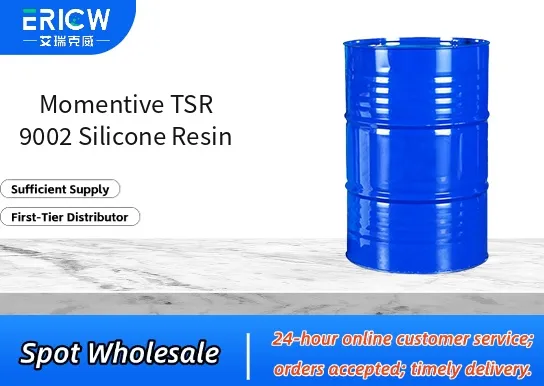
High thermal stability, maintaining integrity up to 250 °C continuous service temperature.
Excellent electrical insulation properties with low dielectric loss across wide frequency and temperature ranges.
Good compatibility with organic resins and pigments, enabling formulation flexibility in hybrid systems.
Low surface energy and inherent hydrophobicity for enhanced moisture resistance and anti-fouling performance.
Solvent-based liquid format offering ease of handling, dispersion, and integration into coating and encapsulation processes.
High-temperature industrial coatings for exhaust components and furnace parts.
Electrical insulation varnishes for motors, transformers, and coil winding systems.
Binders in silicone-based ceramic coatings and refractory composites.
Matrix resin in heat-resistant adhesives and potting compounds for power electronics.
Surface modifier for enhancing weatherability and UV resistance in hybrid architectural finishes.
| Chemical Type | Methyl-phenyl silicone resin |
| Product Form | Liquid, solvent-based (xylene/toluene blend) |
| Appearance | Clear to slightly hazy, colorless to pale yellow liquid |
| Non-Volatile Content | 50–55 wt% (per ASTM D1259) |
| Viscosity (25 °C) | 80–120 cP (Brookfield RV, spindle #1, 6 rpm) |
| Density (25 °C) | 0.92–0.95 g/cm³ |
| pH (10% solution in xylene) | Neutral (6.5–7.5) |
| Key Features | Thermally stable, electrically insulating, hydrophobic, blendable |
Q1: What is the primary function of TSR 9002 in coating formulations?
A: TSR 9002 is a methyl-phenyl silicone resin designed to enhance thermal stability, weather resistance, and surface hardness in high-performance industrial coatings—particularly for metal substrates exposed to elevated temperatures or harsh environmental conditions.
Q2: Is TSR 9002 compatible with organic resin systems such as acrylics or polyesters?
A: Yes, TSR 9002 is formulated to co-cure and integrate well with many thermosetting organic resins—including acrylics, alkyds, and polyester-based systems—enabling hybrid binder architectures that balance silicone performance with cost-effective processing and film formation.
Q3: How is TSR 9002 typically incorporated into a formulation?
A: It is generally added during the let-down stage as a solution in aromatic or high-boiling oxygenated solvents. Dosage depends on formulation requirements but typically ranges from 0.1% to 2% by weight of total solids to achieve optimal balance of silicone functionality without compromising viscosity or cure kinetics.
Q4: Does TSR 9002 require a catalyst to cure, and if so, what type?
A: TSR 9002 is a condensation-curing resin and typically requires a suitable metal-organic catalyst—such as dibutyltin dilaurate (DBTDL) or titanium chelates—to facilitate efficient crosslinking at elevated temperatures. Catalyst selection and level should be optimized based on cure schedule and substrate sensitivity.
Contact With Us:
E-mail: wangxingqiang@ericwchem.com
Have a Questions? Call Us:
Add:
Building A1, Jiete Industrial Park, Huangpu District, Guangzhou City, Guangdong Province, China