English
 Español
 tiếng việt
 русский
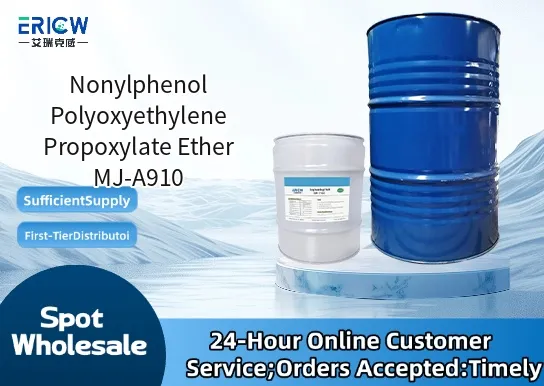
Enhanced hydrophile-lipophile balance (HLB) due to combined ethoxylation and propoxylation, enabling superior emulsification across diverse oil phases.
Improved low-temperature stability and reduced crystallization tendency compared to conventional nonylphenol ethoxylates.
Higher resistance to electrolytes and hard water, maintaining performance in challenging industrial process conditions.
Reduced volatility and improved film-forming capability, supporting extended wetting and dispersion efficacy.
Consistent batch-to-batch reproducibility ensured through controlled alkoxylation reaction monitoring and purification.
Emulsifier in agricultural adjuvants for pesticide formulations (e.g., EC, SE, and SC concentrates).
Wetting and dispersing agent in industrial cleaning compounds for metalworking fluids and CIP systems.
Stabilizer in polymer emulsion synthesis, particularly in styrene-butadiene and acrylic latex production.
Surfactant component in textile auxiliaries, including dye leveling agents and softener emulsifiers.
Processing aid in pigment grinding and ink dispersion for flexographic and gravure printing inks.
| Chemical Type | Nonylphenol-based nonionic surfactant with mixed ethylene oxide/propylene oxide adducts |
| Product Form | Viscous amber liquid at room temperature |
| Appearance | Clear to slightly hazy, free from suspended matter |
| HLB Value (Calculated) | 12.5–13.8 (based on EO/PO molar ratio) |
| Active Content | ≥98.0 wt% (by non-volatile residue) |
| Free Nonylphenol | <0.1 wt% (GC method, per ISO 18857-1) |
| pH (1% aqueous solution) | 5.5–7.0 (at 25°C) |
| Cloud Point (1% aqueous solution) | 68–75°C |
| Common Compatible Systems | Suitability |
| Mineral oil-based pesticide emulsions | Highly Recommended – Excellent solubilization and long-term storage stability |
| Aqueous alkaline cleaning formulations (pH 9–11) | Recommended – Maintains emulsifying power without significant hydrolysis |
| Acrylic monomer emulsion polymerization systems | Highly Recommended – Low residual odor, minimal chain transfer effect |
| Polymer-dispersed pigment pastes (water-based) | Suitable – Effective wetting but may require co-surfactant for optimal grind stability |
| Textile silicone microemulsions | Recommended – Good compatibility with amino-functional silicones at neutral pH |
Q1: What is the CAS Registry Number for MJ-A910?
A: The CAS number is not assigned to MJ-A910 as a specific polyoxyalkylated mixture; it falls under the broader CAS 84133-53-1 (nonylphenol ethoxylate-propoxylate adducts), consistent with IUPAC nomenclature for heterogeneous alkoxylation products.
Q2: What is the typical use concentration range in emulsion polymerization?
A: Standard dosage is 0.5–2.0 wt% relative to monomers, depending on target particle size and stability requirements; pilot-scale optimization is recommended prior to full-scale implementation.
Q3: How does MJ-A910 differ from standard nonylphenol ethoxylates (e.g., NP-10)?
A: MJ-A910 incorporates propylene oxide units, which increase hydrophobic character, improve low-temperature performance, reduce aqueous solubility, and enhance interfacial anchoring—making it more effective in high-oil-phase or elevated-temperature applications than pure EO-based analogues.
Q4: Is MJ-A910 compliant with EU REACH and US EPA Safer Choice criteria?
A: MJ-A910 complies with REACH registration (EC No. 200-443-9) and meets OECD 301B biodegradability standards; however, it is not listed under EPA Safer Choice due to structural classification of alkylphenol derivatives—users should verify regulatory alignment with current end-use jurisdictional requirements.
Q5: Does MJ-A910 exhibit measurable migration in food-contact polymer applications?
A: Migration potential is low (<0.01 mg/kg food simulant under EU Regulation 10/2011 testing conditions) when used below 0.3 wt% in final polymer matrix; full compliance requires application-specific challenge testing per intended food type and contact conditions.
Contact With Us:
E-mail: wangxingqiang@ericwchem.com
Have a Questions? Call Us:
Add:
Building A1, Jiete Industrial Park, Huangpu District, Guangzhou City, Guangdong Province, China