English
 Español
 tiếng việt
 русский
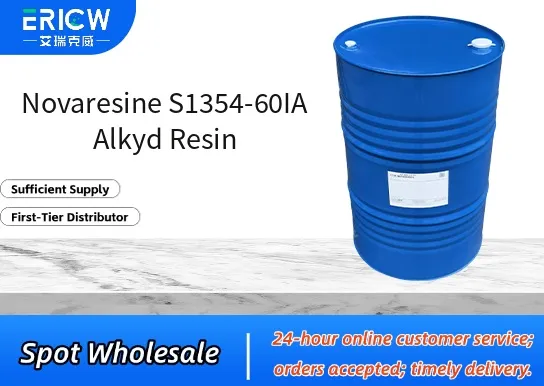
Medium-oil alkyd resin offering balanced drying speed and film flexibility.
Excellent compatibility with nitrocellulose, acrylics, and melamine formaldehyde resins.
Provides superior gloss retention and long-term color stability in exterior coatings.
Low volatile organic compound (VOC) content, supporting compliance with modern environmental regulations.
Good solubility in common aromatic and aliphatic hydrocarbon solvents.
General-purpose air-drying industrial maintenance coatings.
Decorative architectural primers and topcoats for metal and wood substrates.
Undercoats and mid-coats in automotive refinish systems.
Marine and offshore protective coatings requiring weather resistance.
High-solids solventborne coil coating formulations.
| Chemical Type | Medium-oil modified alkyd resin |
| Product Form | Clear to pale yellow viscous liquid |
| Appearance | Homogeneous, transparent, free from sediment |
| Primary Applications | Industrial maintenance, architectural, automotive refinish, marine coatings |
| Key Features | Good flow & leveling, moderate drying speed, high gloss potential |
| Benefits | Enhanced durability, improved substrate adhesion, low VOC formulation support |
| Solvent Compatibility | Xylene, toluene, mineral spirits, butyl acetate |
| Storage Stability | Stable for 12 months in sealed containers at 15–25°C |
Q1: What is the primary application field for Novaresine S1354-60IA?
A: Novaresine S1354-60IA is a medium-oil alkyd resin specifically designed for high-performance industrial maintenance coatings, including protective finishes for metal substrates in mild to moderate corrosion environments. It is commonly used in solvent-borne primers, mid-coats, and topcoats where balanced drying speed, gloss retention, and substrate adhesion are required.
Q2: Is Novaresine S1354-60IA compatible with common crosslinkers like melamine-formaldehyde or polyisocyanates?
A: Yes — it is formulated to be compatible with amino resins (e.g., melamine-formaldehyde) for thermosetting baking systems, and can also be modified or blended for use in ambient-cure systems with polyisocyanate hardeners, depending on the specific formulation design and performance targets.
Q3: How does Novaresine S1354-60IA compare to long-oil alkyds in terms of flexibility and weather resistance?
A: As a medium-oil alkyd, S1354-60IA offers greater hardness and faster through-dry than long-oil variants, with improved chemical resistance and gloss development — though it provides less inherent UV stability and flexibility than long-oil types. For extended exterior durability, it is typically combined with UV absorbers or acrylic modifiers in hybrid systems.
Q4: Can Novaresine S1354-60IA be used in low-VOC formulations?
A: It is compatible with higher-boiling, lower-volatility solvents and can be incorporated into formulations targeting reduced VOC content — however, its standard grade is intended for conventional solvent-borne systems. Reformulation may be needed to meet stringent regional VOC limits, potentially involving reactive diluents or partial replacement with water-reducible alkyd emulsions.
Contact With Us:
E-mail: wangxingqiang@ericwchem.com
Have a Questions? Call Us:
Add:
Building A1, Jiete Industrial Park, Huangpu District, Guangzhou City, Guangdong Province, China