English
 Español
 tiếng việt
 русский
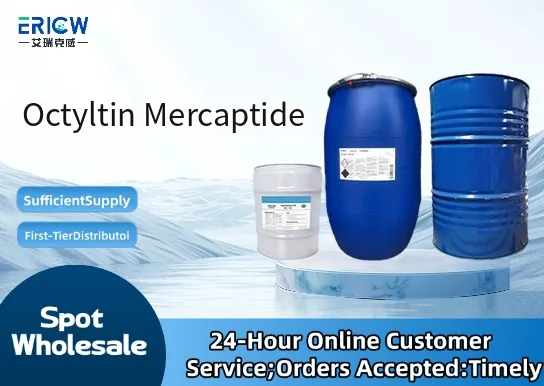
High thermal stability suitable for demanding high-temperature polymer processing conditions.
Excellent compatibility with polyvinyl chloride (PVC) and its copolymers, ensuring uniform dispersion and reduced plate-out.
Low volatility and minimal odor compared to alternative tin-based stabilizers.
Effective long-term heat stabilization with synergistic performance in combination with co-stabilizers (e.g., epoxidized soybean oil).
Non-staining formulation ideal for transparent and light-colored PVC applications.
Rigid PVC profiles for window frames and siding requiring high weatherability and dimensional stability.
PVC pipes and fittings subjected to elevated extrusion temperatures and pressure.
Transparent PVC films and sheets used in packaging and medical tubing.
Flexible PVC compounds for wire & cable insulation where low smoke and halogen-free performance are critical.
Calendered PVC flooring and wall coverings requiring consistent surface finish and color retention.
| Chemical Type | Organotin mercaptide (mono- or mixed octyltin sulfide derivative) |
| Product Form | Pale yellow to amber viscous liquid or semi-solid paste |
| Appearance | Clear to slightly hazy, homogeneous liquid/paste at 25°C |
| Melting Point / Softening Range | 35–45°C (varies by grade; fully fluid above 40°C) |
| Primary Applications | Heat stabilizer for rigid and flexible PVC |
| Key Features | High initial color hold, excellent long-term thermal stability, low volatility |
| Benefits | Reduces degradation during extrusion/injection molding; minimizes discoloration and HCl evolution |
| Regulatory Compliance | Complies with EU REACH; not classified as CMR under CLP Regulation; RoHS compliant |
| Common Compatible Systems | Suitability |
| Rigid PVC (uPVC) formulations with Ca/Zn co-stabilizers | Highly Recommended – Enhances synergistic heat stability and reduces zinc stearate demand |
| Flexible PVC with plasticizers (DOP, DOTP, DINCH) | Recommended – Maintains compatibility without exuding or blooming |
| PVC blends with impact modifiers (MBS, CPE) | Suitable – No adverse interaction observed in standard compounding protocols |
| Acrylic-based processing aids | Recommended – Compatible in typical dosage ranges (1–3 phr) |
Q1: What is the CAS Registry Number for Octyltin Mercaptide?
A: The CAS number is 301-10-0 (representative for di-n-octyltin bis(mercaptoacetate); exact CAS may vary by specific mercaptide composition — consult batch-specific CoA).
Q2: What is the typical recommended dosage range in PVC formulations?
A: Standard dosage is 0.5–2.0 parts per hundred resin (phr), depending on PVC type, processing temperature, and required stability profile — optimization via lab-scale torque rheometry is advised.
Q3: How does Octyltin Mercaptide compare to methyltin and butyltin mercaptides in performance?
A: Octyltin offers superior thermal stability vs. butyltin and lower volatility vs. methyltin; it balances cost-effectiveness, regulatory acceptance, and processing safety better than shorter-chain analogues.
Q4: Is Octyltin Mercaptide compliant with food-contact regulations?
A: Not approved for direct food-contact applications under FDA 21 CFR §178.2010 or EU Regulation (EC) No 10/2011; intended for industrial and construction-grade PVC only.
Q5: Does Octyltin Mercaptide exhibit migration or extractability in end-use products?
A: Migration potential is low due to high molecular weight and strong PVC affinity; validated via solvent extraction (e.g., hexane, ethanol) per ISO 17987 shows <0.1% extractables under standard test conditions.
Contact With Us:
E-mail: wangxingqiang@ericwchem.com
Have a Questions? Call Us:
Add:
Building A1, Jiete Industrial Park, Huangpu District, Guangzhou City, Guangdong Province, China