English
 Español
 tiếng việt
 русский
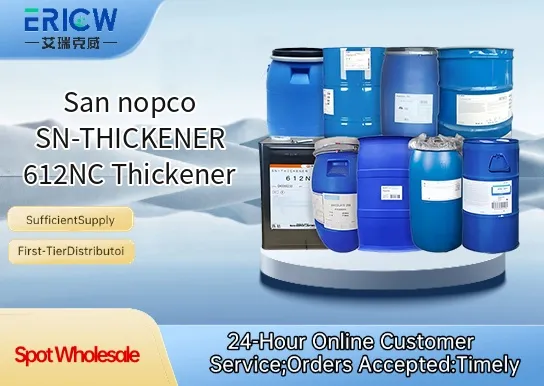
Non-ionic, high-shear stable rheology modifier for aqueous systems.
Excellent compatibility with anionic surfactants and common electrolytes.
Enables rapid viscosity development with low dosage requirements (0.2–0.8 wt%).
Provides outstanding suspension stability for insoluble particulates and pigments.
Low-foaming formulation suitable for high-efficiency cleaning and industrial processes.
Household and industrial liquid detergents.
Carpet shampoos and hard-surface cleaners.
Water-based metalworking fluids.
Agrochemical suspensions and spray adjuvants.
Architectural coatings and maintenance paints.
| Chemical Type | Non-ionic associative polyurethane thickener |
| Product Form | Clear to slightly hazy viscous liquid |
| Appearance | Colorless to pale yellow liquid |
| pH (1% aqueous solution) | 6.0–7.5 |
| Solubility | Water-miscible; forms clear, stable solutions in water |
| Primary Applications | Viscosity control in surfactant-rich aqueous formulations |
| Key Features | Shear-thinning behavior, temperature stability up to 60°C |
| Benefits | Improved product aesthetics, enhanced suspension, reduced sagging in vertical applications |
Q1: What types of formulations is SN-THICKENER 612NC most commonly used in?
A: SN-THICKENER 612NC is primarily designed for water-based industrial coatings, architectural paints, and construction mortars where controlled rheology and sag resistance are required. It performs well in both acrylic and styrene-acrylic dispersions, as well as cementitious systems.
Q2: How does SN-THICKENER 612NC differ from associative thickeners or cellulosic thickeners?
A: Unlike traditional hydroxyethyl cellulose (HEC), SN-THICKENER 612NC is a non-ionic, surface-active polymeric thickener that provides enhanced shear-thinning behavior and improved spatter resistance. It offers better compatibility with surfactants and co-thickeners, and typically delivers more stable viscosity over time compared to many conventional non-associative types.
Q3: What is the recommended method of addition for optimal performance?
A: For best results, SN-THICKENER 612NC should be added during the let-down stage, preferably after dispersing pigments and fillers. It is generally introduced as a pre-diluted aqueous solution (e.g., 10–20% w/w) under moderate agitation to ensure uniform distribution and avoid localized overdosing.
Q4: Is SN-THICKENER 612NC compatible with biocides and defoamers commonly used in paint systems?
A: Yes, SN-THICKENER 612NC demonstrates broad compatibility with standard isothiazolinone and formaldehyde-releasing biocides, as well as silicone and mineral oil-based defoamers. However, compatibility testing under actual formulation conditions is always recommended due to potential interactions with high-HLB surfactants or strongly ionic additives.
Contact With Us:
E-mail: wangxingqiang@ericwchem.com
Have a Questions? Call Us:
Add:
Building A1, Jiete Industrial Park, Huangpu District, Guangzhou City, Guangdong Province, China