English
 Español
 tiếng việt
 русский
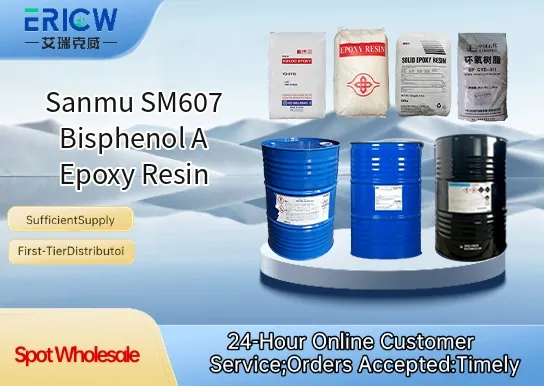
High purity bisphenol A-based epoxy resin with consistent epoxide equivalent weight (EEW) for reliable reactivity control.
Excellent thermal stability and low volatility, supporting high-temperature processing and extended pot life.
Superior adhesion to metals, composites, and cured thermosets—ideal for structural bonding and coating systems.
Low ionic chloride content (< 500 ppm), minimizing corrosion risk in electronic encapsulation and aerospace applications.
Optimized molecular weight distribution for balanced viscosity, mechanical strength, and crosslink density.
Electrical insulation and potting compounds for transformers, reactors, and high-voltage equipment.
Structural adhesives in automotive and rail vehicle assembly, especially for aluminum and CFRP bonding.
High-performance protective coatings for offshore platforms, chemical storage tanks, and industrial flooring.
Matrix resin in filament-wound composite pressure vessels and wind turbine blade components.
Prepreg systems for aerospace-grade laminates requiring low outgassing and high glass transition temperature (Tg).
| Chemical Type | Bisphenol A diglycidyl ether (DGEBA) epoxy resin |
| Product Form | Clear to pale yellow viscous liquid |
| Appearance | Transparent, homogeneous, free of gels or suspended particles |
| Epoxide Equivalent Weight (EEW) | 185–192 g/eq |
| Viscosity (25°C) | 12,000–16,000 mPa·s |
| Chlorine Content (Total) | ≤ 800 ppm |
| Softening Point | 12–16°C |
| Color (Gardner Scale) | ≤ 2 |
Q1: What are the primary application areas for Sanmu SM607?
A: Sanmu SM607 is widely used in high-performance protective coatings, electrical laminates, adhesives for structural bonding, and composite matrix resins—particularly where thermal stability, chemical resistance, and strong adhesion to metals and fibers are required.
Q2: How does SM607 compare to standard liquid DGEBA epoxy resins in terms of reactivity and handling?
A: SM607 exhibits typical reactivity for a medium-molecular-weight Bisphenol A diglycidyl ether resin. It offers balanced pot life and cure speed when paired with common amine or anhydride hardeners, making it suitable for both ambient-cure and elevated-temperature processing without requiring specialized equipment.
Q3: Is SM607 compatible with common epoxy curing agents and modifiers?
A: Yes—SM607 is fully compatible with aliphatic and aromatic amines, cycloaliphatic amines, anhydrides, and phenolic novolacs. It also blends well with reactive diluents, flexibilizers, and fillers commonly used in industrial epoxy formulations.
Q4: What are the recommended storage conditions to maintain product integrity?
A: Store SM607 in tightly sealed original containers at temperatures between 10 °C and 30 °C, away from direct sunlight and moisture. Prolonged exposure to freezing temperatures or excessive heat may affect viscosity and long-term stability.
Q5: Can SM607 be used in food-contact or potable water applications?
A: SM607 is not pre-qualified for direct food-contact or potable water applications. Its suitability for such uses depends on final formulation, full curing, regulatory review by end-product manufacturers, and compliance with applicable regional food safety frameworks.
Contact With Us:
E-mail: wangxingqiang@ericwchem.com
Have a Questions? Call Us:
Add:
Building A1, Jiete Industrial Park, Huangpu District, Guangzhou City, Guangdong Province, China