English
 Español
 tiếng việt
 русский
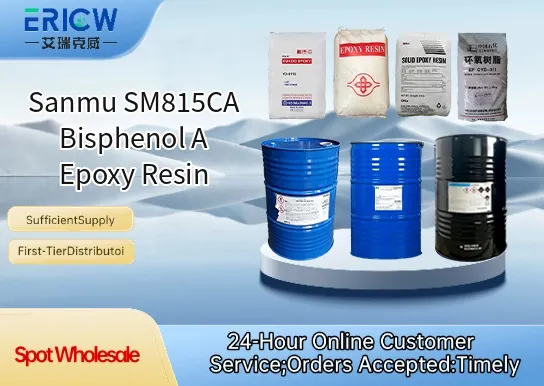
High purity bisphenol A-based epoxy resin with consistent molecular weight distribution.
Excellent thermal stability and low ionic impurity content for enhanced electrical insulation performance.
Optimized viscosity for improved processability in solvent-free and high-solids coating systems.
Superior adhesion to metals, composites, and cured polymer substrates.
Low chloride ion content (< 500 ppm), supporting reliability in electronic encapsulation applications.
Electrical and electronic encapsulants for ICs, sensors, and power modules.
High-performance protective coatings for industrial steel structures and marine equipment.
Matrix resin for carbon fiber and glass fiber reinforced composites in aerospace and wind energy.
Adhesives for structural bonding in automotive and rail transportation components.
Base resin for UV-curable and hybrid (UV/thermal) dual-cure formulations.
| Chemical Type | Bisphenol A diglycidyl ether (DGEBA) |
| Product Form | Clear to pale yellow viscous liquid |
| Appearance | Transparent, homogeneous liquid at 25°C |
| Epoxy Equivalent Weight (EEW) | 184–190 g/eq |
| Viscosity (25°C) | 11,000–13,000 mPa·s |
| Chlorine Content (Total) | ≤ 700 ppm |
| Softening Point | Not applicable (liquid at room temperature) |
| Storage Stability | ≥ 12 months at < 25°C in sealed containers |
Q1: What is the primary application niche for Sanmu SM815CA?
A: Sanmu SM815CA is specially formulated for high-performance protective coatings and industrial adhesives where excellent chemical resistance, strong substrate adhesion, and thermal stability are required — particularly in metal primers, marine coatings, and structural bonding systems.
Q2: How does SM815CA compare to standard liquid DGEBA resins in terms of viscosity and handling?
A: SM815CA exhibits a medium-viscosity profile, offering improved flow and wetting characteristics over higher-molecular-weight solid epoxies while maintaining better pot life and reduced volatility compared to ultra-low-viscosity liquid resins — making it well-suited for solvent-free or low-solvent formulations.
Q3: Is SM815CA compatible with common amine-based hardeners?
A: Yes, SM815CA is fully compatible with aliphatic, cycloaliphatic, and aromatic amine hardeners, as well as anhydride and phenolic co-reactants. Cure profiles can be tailored across ambient to elevated temperatures depending on the selected hardener system.
Q4: Can SM815CA be used in food-contact coating applications?
A: While SM815CA is based on bisphenol A chemistry and meets general industrial epoxy performance standards, its suitability for food-contact applications depends entirely on final formulation compliance, regulatory approval of all components, and end-use processing conditions — users must conduct full regulatory evaluation and obtain necessary authorizations prior to such use.
Contact With Us:
E-mail: wangxingqiang@ericwchem.com
Have a Questions? Call Us:
Add:
Building A1, Jiete Industrial Park, Huangpu District, Guangzhou City, Guangdong Province, China