English
 Español
 tiếng việt
 русский
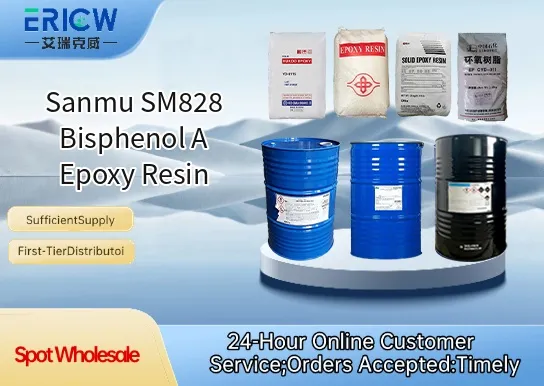
High purity bisphenol A-based epoxy resin with consistent molecular weight distribution.
Excellent thermal stability and low volatility during processing.
Superior adhesion to metals, glass, and composite substrates.
Low viscosity at elevated temperatures, enabling efficient impregnation and coating.
Compatible with standard amine and anhydride curing agents for versatile formulation flexibility.
Electrical insulation systems for motors, transformers, and generators.
Structural composites in wind turbine blades and aerospace components.
High-performance protective coatings for marine and industrial infrastructure.
Adhesives for automotive bonding and electronic encapsulation.
Potting and encapsulation compounds for power electronics and LED modules.
| Chemical Type | Bisphenol A diglycidyl ether (DGEBA) epoxy resin |
| Product Form | Clear to pale yellow viscous liquid |
| Appearance | Transparent, homogeneous liquid without visible particles or gel |
| Epoxy Equivalent Weight (EEW) | 185–192 g/eq |
| Viscosity (25°C) | 12,000–16,000 mPa·s |
| Chloride Content | ≤ 800 ppm |
| Softening Point | Not applicable (liquid at room temperature) |
| Primary Applications | Electrical insulation, composites, protective coatings, adhesives, potting |
Q1: What is the typical application scope of Sanmu SM828?
A: Sanmu SM828 is a standard-grade bisphenol A epoxy resin widely used in protective coatings, electrical laminates, adhesives, and composite matrices where balanced mechanical strength, chemical resistance, and thermal stability are required.
Q2: How is Sanmu SM828 typically cured?
A: It is commonly cured with amine-based hardeners (e.g., aliphatic or aromatic amines), anhydrides, or catalytic systems such as Lewis acids. Cure conditions vary depending on the hardener selection—room-temperature curing is possible with reactive amines, while elevated temperatures often enhance crosslink density and final performance.
Q3: Is Sanmu SM828 suitable for food-contact applications?
A: Sanmu SM828 is not pre-certified for direct food contact. Its suitability depends on full formulation compliance—including hardener, additives, and final cure conditions—with applicable regional food-contact regulations. End-use validation by the formulator is required.
Q4: What viscosity range can be expected for Sanmu SM828 at room temperature?
A: As a liquid bisphenol A epoxy resin, Sanmu SM828 exhibits medium viscosity—sufficiently low for easy handling and mixing, yet high enough to support good film formation and minimize sagging in coating applications. Viscosity is temperature-sensitive and may require mild heating for optimal processing in cooler environments.
Q5: How should Sanmu SM828 be stored to maintain stability?
A: Store in tightly sealed containers under dry, cool conditions (preferably below 30 °C) and away from moisture, strong oxidizing agents, and direct sunlight. Prolonged exposure to elevated temperatures or humidity may lead to premature crystallization or viscosity increase.
Contact With Us:
E-mail: wangxingqiang@ericwchem.com
Have a Questions? Call Us:
Add:
Building A1, Jiete Industrial Park, Huangpu District, Guangzhou City, Guangdong Province, China