English
 Español
 tiếng việt
 русский
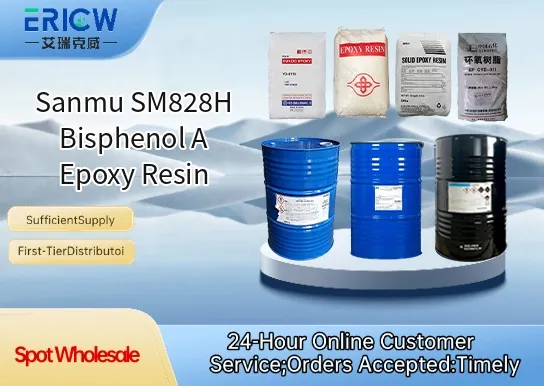
High purity bisphenol A-based epoxy resin with low chloride content for enhanced electrical insulation performance.
Optimized molecular weight distribution ensuring excellent flow, wetting, and adhesion to diverse substrates.
Good thermal stability and compatibility with standard amine and anhydride curing agents.
Low viscosity at elevated processing temperatures, facilitating easy handling and impregnation in composite manufacturing.
Consistent batch-to-batch quality meeting ISO 9001-certified production standards.
Electrical laminates for printed circuit boards (PCBs) and insulating structural components.
High-voltage encapsulation and potting compounds for transformers, sensors, and power electronics.
Prepreg and filament winding resins for aerospace-grade carbon fiber composites.
Adhesives and coatings requiring superior chemical resistance and dimensional stability.
Wind turbine blade bonding and structural reinforcement systems.
| Chemical Type | Bisphenol A epoxy resin (liquid) |
| Product Form | Clear to pale yellow viscous liquid |
| Appearance | Homogeneous, transparent, free of visible particles or gels |
| Epoxy Equivalent Weight (EEW) | 185–195 g/eq |
| Viscosity (25°C) | 12,000–16,000 cP |
| Chloride Content | ≤ 700 ppm |
| Softening Point | Not applicable (liquid at room temperature) |
| Primary Applications | Electrical insulation, composites, encapsulation, high-performance adhesives |
Q1: What is the primary application niche for Sanmu SM828H?
A: Sanmu SM828H is specifically formulated for high-performance protective coatings and industrial adhesives where enhanced chemical resistance, thermal stability, and strong substrate adhesion are required—particularly in metal primers, marine coatings, and structural bonding systems.
Q2: How does SM828H differ from standard liquid DGEBA epoxy resins?
A: SM828H features a controlled molecular weight distribution and optimized epoxide equivalent weight, delivering improved viscosity-temperature behavior and reduced volatility compared to conventional bisphenol A diglycidyl ether resins—supporting easier handling and more consistent film formation in solvent-free or low-solvent formulations.
Q3: Is SM828H compatible with common amine and anhydride curing agents?
A: Yes—SM828H exhibits broad compatibility with aliphatic and cycloaliphatic amines, polyamides, and aromatic anhydrides. Cure kinetics and final properties can be tailored by selecting appropriate hardeners and adjusting stoichiometry based on end-use performance targets.
Q4: Can SM828H be used in food-contact coating applications?
A: While SM828H is based on bisphenol A chemistry, its suitability for food-contact applications depends entirely on full regulatory assessment of the final cured system—including all co-resins, hardeners, additives, and processing conditions. Customers must validate compliance with applicable regional food safety regulations before use in such applications.
Q5: What storage conditions are recommended to maintain product stability?
A: Store SM828H in tightly sealed containers at temperatures between 10°C and 30°C, away from direct sunlight and moisture. Prolonged exposure to elevated temperatures or humidity may affect viscosity and reactivity over time; always inspect appearance and consistency prior to use.
Contact With Us:
E-mail: wangxingqiang@ericwchem.com
Have a Questions? Call Us:
Add:
Building A1, Jiete Industrial Park, Huangpu District, Guangzhou City, Guangdong Province, China