English
 Español
 tiếng việt
 русский
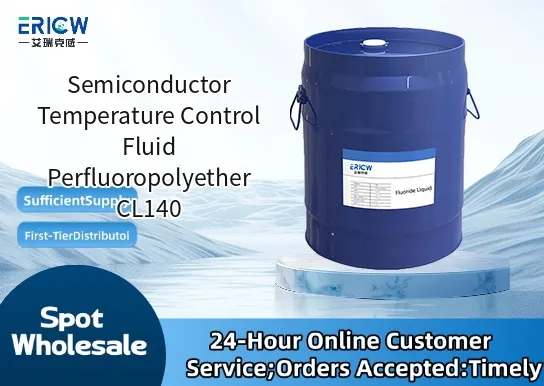
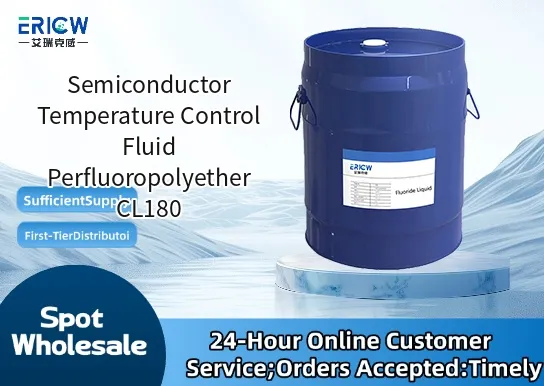
Exceptionally wide operational temperature range: –70 °C to +200 °C continuous, with short-term excursions up to +250 °C.
Zero volatility and negligible vapor pressure at room temperature — ideal for high-vacuum and ultra-clean semiconductor process environments.
Chemically inert toward silicon, silicon dioxide, photoresists, fluoropolymers, stainless steel, and aluminum — prevents corrosion and contamination.
Non-flammable (ASTM D92 flash point >300 °C) and thermally stable under inert atmospheres or nitrogen purge conditions.
Low outgassing profile per ASTM E595, meeting NASA low-TML (<0.1%) and CVCM (<0.01%) requirements for space-grade thermal management.
Chillers and recirculating temperature control units (TCUs) used in photolithography steppers and scanners.
Thermal interface fluid in wafer probers, test handlers, and advanced packaging thermal cycling chambers.
Dielectric heat transfer medium for high-power RF and GaN-based power amplifier modules during burn-in and reliability testing.
Coolant in vacuum-compatible cold plates for EUV light source components and metrology sensor calibration systems.
Temperature stabilization fluid for cryogenic and high-temperature probe stations in semiconductor device characterization labs.
| Chemical Type | Perfluoropolyether (PFPE), linear structure, fully fluorinated backbone |
| Product Form | Ambient-stable clear liquid |
| Appearance | Colorless, odorless, transparent liquid |
| Melting Point | –70 °C (typical, onset) |
| Boiling Point (at 760 torr) | Decomposes >350 °C; no true boiling point observed |
| Density (25 °C) | 1.82–1.86 g/cm³ |
| Dynamic Viscosity (25 °C) | 140–155 cSt |
| Regulatory Compliance | REACH SVHC-free; RoHS 2015/863 compliant; no PFOA, PFOS, or GenX substances |
| Common Compatible Systems | Suitability |
| Julabo FT Series Recirculating Chillers (with PFPE-certified seals) | Highly Recommended – Compatible with FKM, Kalrez®, and metal-sealed wetted parts |
| Huber Ministat 230 TCUs (modified for PFPE use) | Recommended – Requires seal upgrade from NBR to FFKM and stainless-steel pump housing |
| LAUDA Proline KP605 High-Temp Circulators | Suitable – Verified for continuous operation up to 200 °C with standard PFPE-compatible tubing |
| Custom-built vacuum-jacketed thermal test platforms | Highly Recommended – Minimal outgassing ensures chamber base pressure stability & no condensate formation |
Q1: What is the CAS Registry Number for CL140?
A: The CAS RN for Semiconductor Temperature Control Fluid Perfluoropolyether CL140 is 60168-88-9 (generic PFPE-K type; exact oligomer distribution is proprietary).
Q2: Can CL140 be mixed with other heat transfer fluids such as silicone oils or mineral-based coolants?
A: No — CL140 is immiscible with hydrocarbons, silicones, glycols, and most polar solvents. Mixing may cause phase separation, reduced thermal stability, and unpredictable viscosity shifts. Always flush systems thoroughly before switching to CL140.
Q3: Does CL140 exhibit extractables or leachables when in contact with EPDM or Viton® seals during long-term operation?
A: CL140 shows negligible extraction from FFKM (e.g., Kalrez® 0040) and metal seals. However, avoid prolonged exposure to EPDM, NBR, or standard Viton® A — these may swell or release low-MW fluorocarbon fragments detectable via GC-MS in ultra-trace analytical workflows.
Q4: Is CL140 approved for use in ISO Class 1 cleanrooms and semiconductor fabrication facilities?
A: Yes — CL140 meets ISO 14644-1 Class 1 airborne particle limits when dispensed using certified low-particulate filtration (0.1 µm absolute). It is widely qualified by leading foundries for front-end-of-line (FEOL) thermal equipment where organic residue control is critical.
Contact With Us:
E-mail: wangxingqiang@ericwchem.com
Have a Questions? Call Us:
Add:
Building A1, Jiete Industrial Park, Huangpu District, Guangzhou City, Guangdong Province, China