English
 Español
 tiếng việt
 русский
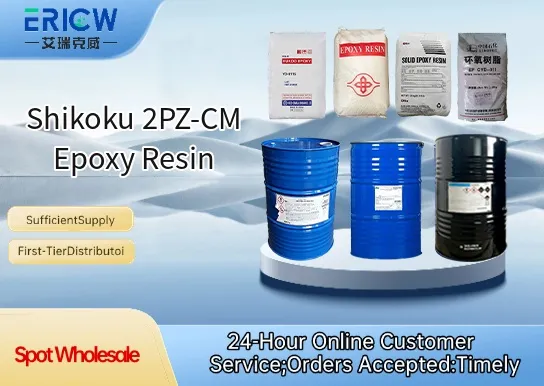
Highly reactive liquid epoxy resin with low viscosity for excellent processability and filler wetting.
Designed for cationic UV-curable systems, enabling rapid, low-energy curing without volatile organic compounds (VOCs).
Superior adhesion to diverse substrates including metals, glass, and plastics under ambient conditions.
Excellent chemical resistance to weak acids, alkalis, and aliphatic solvents after full cure.
Low shrinkage during polymerization, contributing to dimensional stability in precision coatings and encapsulants.
UV-curable protective coatings for electronic components and printed circuit boards (PCBs).
Optical adhesives for lens bonding and display assembly in consumer electronics.
Encapsulants for LED packaging requiring high transparency and thermal reliability.
Overprint varnishes and functional coatings on flexible packaging films.
3D printing resins for high-resolution stereolithography (SLA) applications demanding fine detail and surface hardness.
| Chemical Type | Cationic UV-curable cycloaliphatic epoxy resin |
| Product Form | Clear, pale yellow liquid |
| Appearance | Homogeneous, transparent liquid at 25°C |
| Viscosity (25°C) | 180–220 mPa·s (cP) |
| Epoxy Equivalent Weight (EEW) | 145–155 g/eq |
| Refractive Index (25°C) | 1.475–1.485 |
| Storage Stability | ≥12 months at 5–25°C in sealed containers, protected from moisture and UV light |
| Primary Applications | UV-curable coatings, adhesives, and encapsulants for electronics and optics |
Q1: What is the primary functional role of Shikoku 2PZ-CM in epoxy formulations?
A: Shikoku 2PZ-CM is a reactive diluent designed to reduce viscosity and improve processability of epoxy resins without significantly compromising crosslink density or thermal performance. It participates directly in the curing reaction, contributing to the final polymer network.
Q2: Is Shikoku 2PZ-CM compatible with common amine and anhydride curing agents?
A: Yes, it demonstrates broad compatibility with standard aliphatic, cycloaliphatic, and aromatic amines, as well as anhydride-type hardeners. Compatibility should be verified experimentally for specific formulation systems, particularly where high reactivity balance or extended pot life is required.
Q3: How does Shikoku 2PZ-CM affect the cured epoxy’s mechanical and thermal properties?
A: When used at typical dosage levels, it helps maintain good tensile strength, flexural modulus, and heat resistance—often comparable to formulations using conventional bisphenol-A based resins. Excessive loading may reduce glass transition temperature (Tg) and hardness, so optimization is recommended per application.
Q4: What are key handling and storage recommendations for this product?
A: Store in tightly sealed containers under dry, cool conditions, away from moisture, strong oxidizing agents, and direct sunlight. Prolonged exposure to humidity may lead to viscosity increase or gelation. Always follow standard industrial hygiene practices when handling.
Contact With Us:
E-mail: wangxingqiang@ericwchem.com
Have a Questions? Call Us:
Add:
Building A1, Jiete Industrial Park, Huangpu District, Guangzhou City, Guangdong Province, China