English
 Español
 tiếng việt
 русский
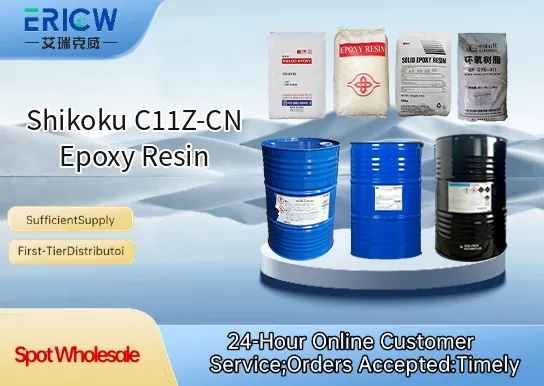
High reactivity with amine and anhydride curing agents for rapid gelation and short cycle times.
Excellent electrical insulation properties, suitable for high-voltage encapsulation applications.
Low viscosity (4,000–6,000 mPa·s at 25°C) enabling superior flow, wetting, and void-free impregnation.
Good thermal stability with glass transition temperature (Tg) exceeding 130°C after full cure.
Low chloride ion content (< 500 ppm), minimizing corrosion risk in sensitive electronic components.
Encapsulation and potting of power electronics, including IGBT modules and EV inverters.
Impregnation of dry-type transformers and high-voltage reactors.
Structural bonding in aerospace composite assemblies requiring elevated thermal performance.
Electrical insulation coatings for busbars and switchgear components.
Matrix resin for filament-wound insulators and hollow-core composite bushings.
| Chemical Type | Bisphenol-F based novolac epoxy resin |
| Product Form | Clear to pale amber viscous liquid |
| Appearance | Homogeneous, transparent, free from gels or suspended matter |
| Epoxy Equivalent Weight (EEW) | 185–195 g/eq |
| Viscosity (25°C) | 4,500–5,500 mPa·s |
| Chloride Content | ≤ 400 ppm |
| Softening Point | Not applicable (liquid at room temperature) |
| Storage Stability | Stable for ≥12 months at ≤25°C in sealed containers |
Q1: What is the primary functional role of Shikoku C11Z-CN in epoxy formulations?
A: Shikoku C11Z-CN is a cycloaliphatic epoxy resin designed primarily as a reactive diluent and viscosity modifier. It helps reduce formulation viscosity without significantly compromising thermal stability or chemical resistance, enabling improved processability in coating, adhesive, and encapsulation systems.
Q2: Is Shikoku C11Z-CN suitable for UV-curable epoxy systems?
A: Yes — C11Z-CN contains a highly reactive cyclohexyl epoxide structure that responds well to cationic photoinitiators under UV exposure. It is commonly incorporated into hybrid or full UV-curable epoxy formulations where low shrinkage and good adhesion are required.
Q3: How does C11Z-CN compare to standard bisphenol-A epoxy resins in terms of weathering performance?
A: Unlike aromatic epoxies, C11Z-CN’s cycloaliphatic backbone provides inherently superior UV stability and resistance to yellowing. It is frequently selected for outdoor applications where long-term gloss retention and color stability are critical.
Q4: What types of curing agents are typically compatible with Shikoku C11Z-CN?
A: C11Z-CN exhibits good reactivity with a broad range of amine-based hardeners (including aliphatic, cycloaliphatic, and aromatic amines), anhydrides, and cationic photoinitiators. Compatibility and cure profile should be verified experimentally based on end-use requirements.
Contact With Us:
E-mail: wangxingqiang@ericwchem.com
Have a Questions? Call Us:
Add:
Building A1, Jiete Industrial Park, Huangpu District, Guangzhou City, Guangdong Province, China