English
 Español
 tiếng việt
 русский
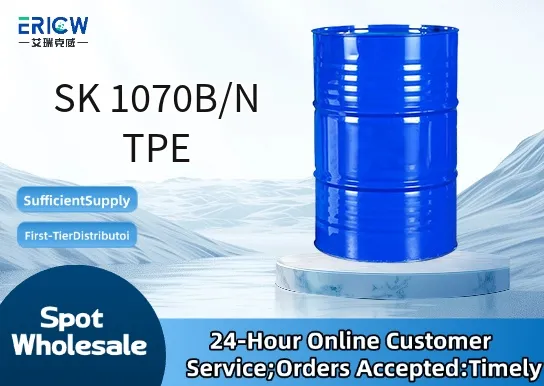
Thermoplastic elastomer with excellent melt processability for injection molding and extrusion.
Good balance of soft-touch feel, elasticity, and mechanical strength at room temperature.
Enhanced resistance to UV exposure and thermal aging compared to conventional SEBS-based TPEs.
Low extractables and compliant with FDA 21 CFR §177.2600 for food-contact applications (subject to final formulation validation).
Compatible with polypropylene (PP) and polyethylene (PE) substrates for co-molding and overmolding.
Soft-grip overmolded handles for power tools and hand-held appliances.
Sealing rings and gaskets in automotive fluid systems.
Food-grade kitchenware components such as spatula heads and jar openers.
Medical device grips and non-critical patient interface parts.
Consumer electronics protective cases and wearable device straps.
| Chemical Type | Styrenic Block Copolymer (SEBS)-based Thermoplastic Elastomer |
| Product Form | Pellets |
| Appearance | Off-white to light tan, free-flowing granules |
| Primary Applications | Overmolding, soft-touch components, sealing elements |
| Key Features | Good compression set resistance, low odor, easy colorability |
| Processing Method | Injection molding, extrusion, two-shot molding |
| Recommended Drying | 60–80 °C for 2–4 hours (if moisture content > 0.1%) |
| Storage Conditions | Store in original sealed packaging at <25 °C and <50% RH |
Q1: What is the primary function of SK 1070B/N TPE in thermoplastic elastomer formulations?
A: SK 1070B/N TPE functions as a high-performance processing aid and compatibilizer, enhancing melt flow, reducing viscosity, and improving dispersion of fillers or additives in TPE compounds—particularly in SEBS- and TPS-based systems.
Q2: Is SK 1070B/N TPE suitable for food-contact or medical-grade applications?
A: SK 1070B/N TPE is designed for industrial and general-purpose TPE compounding. While it meets common regulatory expectations for non-intent-to-contact applications, formal compliance with food-contact or medical device regulations requires full formulation-level evaluation and third-party testing.
Q3: How should SK 1070B/N TPE be incorporated into a TPE compound?
A: It is typically added during the masterbatch or final compounding stage via twin-screw extrusion. Pre-drying is not required, but uniform feeding and moderate shear conditions are recommended to ensure optimal dispersion without thermal degradation.
Q4: Does SK 1070B/N TPE affect the mechanical properties of the final TPE product?
A: When used within typical dosage ranges, it maintains or slightly improves tensile strength and elongation while significantly enhancing processability. Over-addition may reduce hardness or modulus, so dosage should be optimized based on the base polymer system and end-use requirements.
Contact With Us:
E-mail: wangxingqiang@ericwchem.com
Have a Questions? Call Us:
Add:
Building A1, Jiete Industrial Park, Huangpu District, Guangzhou City, Guangdong Province, China