English
 Español
 tiếng việt
 русский
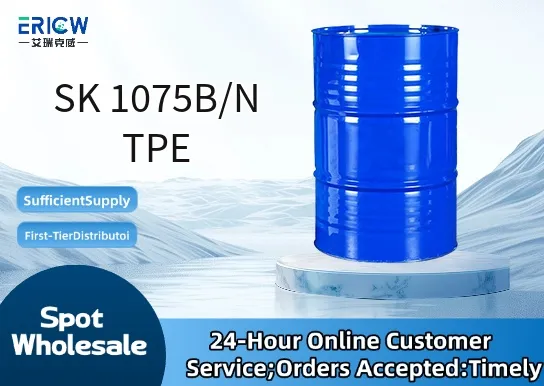
Thermoplastic elastomer based on SEBS (styrene–ethylene–butylene–styrene) thermoplastic elastomer matrix.
Excellent soft-touch feel and high elasticity with low compression set.
Good processability via injection molding, extrusion, and overmolding onto PP, PS, and ABS substrates.
Halogen-free formulation compliant with RoHS and REACH directives.
UV-stabilized for improved outdoor weather resistance and long-term color retention.
Soft-grip handles for power tools and hand-held appliances.
Sealing rings and gaskets in automotive interior components.
Ergonomic grips for medical devices and diagnostic equipment.
Overmolded consumer electronics casings and wearable device bands.
Food-contact-compliant seals and caps (subject to FDA verification per processing conditions).
| Chemical Type | SEBS-based thermoplastic elastomer |
| Product Form | Natural-colored pellets |
| Appearance | Opaque, uniform granules with smooth surface |
| Primary Applications | Overmolding, soft-touch grips, sealing components |
| Key Features | Soft-touch, low compression set, halogen-free, UV-stabilized |
| Processing Method | Injection molding, extrusion, two-shot molding |
| Recommended Melt Temperature | 190–230 °C |
| Storage Conditions | Keep dry at ≤30 °C; use desiccant drying if exposed to humidity >48 hours |
Q1: What is the primary function of SK 1075B/N TPE in thermoplastic elastomer formulations?
A: SK 1075B/N TPE functions as a high-performance processing aid and viscosity modifier, enhancing melt flow, improving surface finish, and facilitating dispersion of fillers and additives in TPE compounds.
Q2: Is SK 1075B/N TPE compatible with common TPE base polymers such as SEBS, TPO, and TPV?
A: Yes, SK 1075B/N TPE demonstrates broad compatibility with major TPE matrix systems including styrenic block copolymers (SEBS), polyolefin-based blends (TPO), and dynamically vulcanized alloys (TPV), supporting stable phase morphology and consistent rheological behavior.
Q3: How should SK 1075B/N TPE be incorporated into a compound—masterbatch or direct addition?
A: It is typically introduced via masterbatch for optimal dispersion control, especially at low loadings; however, direct addition during twin-screw compounding is also effective when proper feed rate and screw configuration ensure uniform distribution.
Q4: Does SK 1075B/N TPE affect the final product’s mechanical properties or thermal stability?
A: When used within recommended dosage ranges, it maintains baseline tensile strength and elongation while contributing to improved thermal stability during processing—without compromising long-term aging performance under standard service conditions.
Contact With Us:
E-mail: wangxingqiang@ericwchem.com
Have a Questions? Call Us:
Add:
Building A1, Jiete Industrial Park, Huangpu District, Guangzhou City, Guangdong Province, China