English
 Español
 tiếng việt
 русский
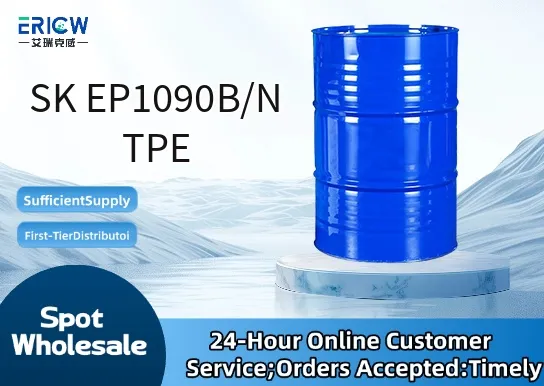
Excellent soft-touch feel with balanced elasticity and recovery.
Good processability via injection molding and extrusion without pre-drying.
Enhanced resistance to UV degradation and thermal aging.
Low extractables and compliant with FDA 21 CFR 177.2600 for food-contact applications.
Compatible with polypropylene (PP) and polyethylene (PE) substrates for co-molding.
Automotive interior trim components including door panels and armrests.
Consumer electronics housings and protective grips for handheld devices.
Medical device overmolds such as syringe barrels and diagnostic equipment seals.
Household appliance handles, knobs, and ergonomic touch surfaces.
Food-grade packaging closures and dispensing components.
| Chemical Type | Thermoplastic Elastomer (TPE), SEBS-based |
| Product Form | Pellets |
| Appearance | Off-white to light beige granules |
| Hardness (Shore A) | 90 ± 3 |
| Melt Flow Rate (200°C/5 kg) | 12–18 g/10 min |
| Density (23°C) | 0.91–0.93 g/cm³ |
| Tensile Strength | 8–10 MPa |
| Elongation at Break | 450–550 % |
Q1: What is SK EP1090B/N TPE and how does it differ from conventional TPEs?
A: SK EP1090B/N TPE is a styrenic thermoplastic elastomer formulated for enhanced processability and balanced mechanical performance in demanding extrusion and injection molding applications. Unlike many general-purpose TPEs, it features optimized melt strength and thermal stability, supporting consistent thin-wall production and improved surface finish without requiring significant equipment modification.
Q2: Is SK EP1090B/N TPE suitable for food-contact or medical-grade applications?
A: SK EP1090B/N TPE is not pre-certified for direct food-contact or medical use. It may be considered for such applications only after full formulation review, regulatory testing, and compliance verification by the end-user’s qualified regulatory team — including evaluation of all additives, processing conditions, and final part geometry.
Q3: How should SK EP1090B/N TPE be dried prior to processing?
A: To ensure optimal melt homogeneity and prevent surface defects, SK EP1090B/N TPE should be dried at 70–80 °C for 2–4 hours using a desiccant dryer. Resin moisture content should be maintained below 0.05% before processing, especially for high-precision or transparent applications.
Q4: Can SK EP1090B/N TPE be blended with other polymers or recycled material?
A: Yes — SK EP1090B/N TPE demonstrates good compatibility with other styrenic polymers and certain polyolefins. Blending with post-industrial regrind is feasible, but recommended at levels ≤20% and requires validation of mechanical retention, color stability, and rheological behavior under intended processing conditions.
Contact With Us:
E-mail: wangxingqiang@ericwchem.com
Have a Questions? Call Us:
Add:
Building A1, Jiete Industrial Park, Huangpu District, Guangzhou City, Guangdong Province, China