English
 Español
 tiếng việt
 русский
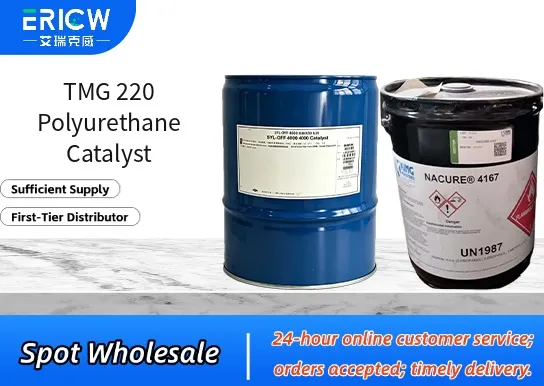
Highly selective tertiary amine catalyst for balanced reactivity in polyol–isocyanate reactions.
Low volatility and minimal odor, supporting safer handling and improved workplace air quality.
Excellent compatibility with common polyether and polyester polyols, as well as aromatic and aliphatic isocyanates.
Enables precise control over cream-to-gel timing in flexible slabstock and molded foam systems.
Stable under standard storage conditions with no significant decomposition over 12 months at room temperature.
Flexible polyurethane foam for mattresses and furniture cushioning.
Automotive interior foams including seat cushions, headrests, and armrests.
Integral skin (self-skinning) foams for steering wheels, dashboards, and decorative trim.
Slabstock foam production requiring consistent cell structure and dimensional stability.
Water-blown low-density foams where reduced emissions and processing safety are critical.
| Chemical Type | Tertiary amine catalyst (N,N,N′,N′-tetramethyl-1,3-butanediamine derivative) |
| Product Form | Liquid |
| Appearance | Clear, colorless to pale yellow liquid |
| Primary Applications | Flexible polyurethane foam systems |
| Key Features | Low volatility, high selectivity, excellent processing control |
| Benefits | Improved worker safety, reduced VOC emissions, consistent foam morphology |
| Storage Stability | ≥12 months at 25°C in sealed original container |
| Recommended Handling | Use in well-ventilated areas; avoid prolonged skin contact |
Q1: What is the primary function of TMG 220 in polyurethane systems?
A: TMG 220 is a tertiary amine-based catalyst designed to promote the urethane reaction (isocyanate–polyol coupling), offering balanced reactivity and improved flow characteristics in flexible and semi-rigid foam formulations.
Q2: Is TMG 220 suitable for water-blown or low-emission foam applications?
A: Yes — TMG 220 exhibits low volatility and minimal odor, making it well-suited for water-blown flexible slabstock foams and other low-VOC systems where operator safety and environmental compliance are priorities.
Q3: How does TMG 220 compare to traditional amine catalysts like DABCO 33-LV?
A: TMG 220 provides comparable gelling activity with reduced volatility and enhanced hydrolytic stability, resulting in more consistent processing behavior and longer shelf life in pre-mixed polyol systems.
Q4: Can TMG 220 be used in combination with other catalysts?
A: Yes — TMG 220 is commonly blended with blowing catalysts (e.g., certain cyclic amines) or delayed-action gelling catalysts to fine-tune cream time, rise profile, and cure development in complex foam formulations.
Contact With Us:
E-mail: wangxingqiang@ericwchem.com
Have a Questions? Call Us:
Add:
Building A1, Jiete Industrial Park, Huangpu District, Guangzhou City, Guangdong Province, China