English
 Español
 tiếng việt
 русский
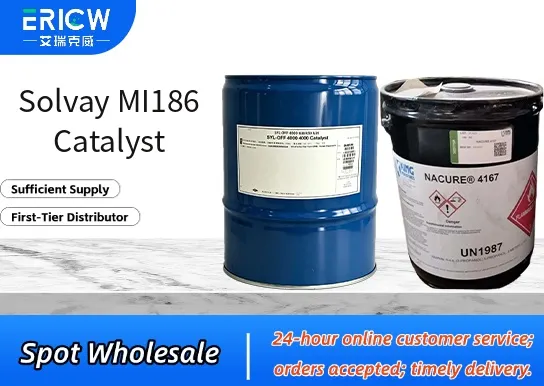
Highly selective cobalt-based catalyst for controlled oxidation reactions.
Thermally stable up to 180 °C, enabling robust performance in continuous-process reactors.
Low metal leaching profile, ensuring product purity and extended catalyst lifetime.
Compatible with common industrial solvents including acetic acid, toluene, and methyl ethyl ketone.
Supplied as a ready-to-use liquid solution—no pre-activation required.
Production of terephthalic acid (TPA) via p-xylene oxidation.
Synthesis of aliphatic carboxylic acids from corresponding aldehydes or alcohols.
Catalytic oxidation steps in pharmaceutical intermediate manufacturing.
Polymer precursor synthesis, including monomer purification and functional group oxidation.
Environmental oxidation processes for VOC abatement in exhaust gas treatment systems.
| Chemical Type | Cobalt(II) acetate tetrahydrate complex in proprietary solvent blend |
| Product Form | Clear, amber-colored liquid solution |
| Appearance | Homogeneous, free-flowing liquid with no visible particulates |
| Primary Applications | Liquid-phase aerobic oxidation of organic substrates |
| Key Features | High selectivity, low decomposition rate, excellent dispersion in polar media |
| Benefits | Reduced side-product formation, improved reactor throughput, simplified handling vs. solid catalysts |
| Storage Recommendation | Store in original sealed container at 15–25 °C; protect from moisture and strong oxidizers |
| Shelf Life | 24 months from date of manufacture when stored under recommended conditions |
Q1: What is the primary function of N-5225 in polyurethane systems?
A: N-5225 is a highly selective tertiary amine catalyst designed to promote urethane bond formation (polyol–isocyanate reaction) while minimizing side reactions such as trimerization or hydrolysis, making it especially suitable for flexible slabstock and molded foam applications.
Q2: How does N-5225 compare to traditional amine catalysts like DABCO® 33-LV?
A: Unlike strongly gelling catalysts, N-5225 offers balanced reactivity with enhanced flow and cream time control, resulting in improved cell uniformity and reduced scorch risk—particularly beneficial in high-output continuous foaming operations.
Q3: Is N-5225 compatible with water-blown and low-VOC formulations?
A: Yes, N-5225 demonstrates excellent compatibility with water-based blowing agents and low-emission polyol systems, supporting formulation strategies aimed at reducing volatile organic compound content without compromising processing stability or foam physical properties.
Q4: What is the typical dosage range for N-5225 in standard flexible foam formulations?
A: Dosage is formulation-dependent but generally ranges from 0.1% to 2% by weight relative to polyol, with optimal performance often achieved at lower concentrations when used in synergy with complementary catalysts or surfactants.
Contact With Us:
E-mail: wangxingqiang@ericwchem.com
Have a Questions? Call Us:
Add:
Building A1, Jiete Industrial Park, Huangpu District, Guangzhou City, Guangdong Province, China