English
 Español
 tiếng việt
 русский
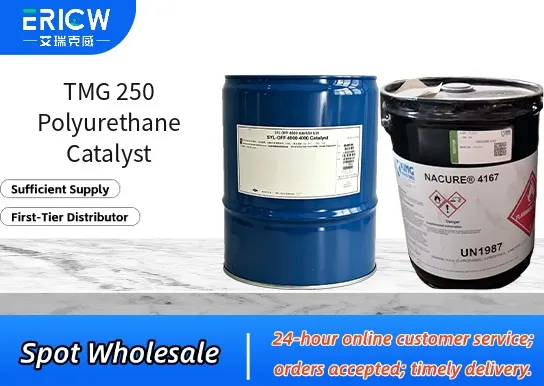
Highly selective tertiary amine catalyst optimized for balanced reactivity in polyurethane foam systems.
Low volatility and reduced odor profile, supporting improved workplace safety and compliance with VOC regulations.
Excellent storage stability—remains effective for ≥12 months when stored under recommended conditions (dry, cool, sealed).
Compatible with a wide range of polyols and isocyanates, including MDI- and TDI-based formulations.
Enables precise control over cream, gel, and rise times—ideal for fine-tuning flexible slabstock and molded foam processing.
Flexible polyurethane slabstock foam for bedding and furniture manufacturing.
Molded flexible foams used in automotive seating and interior components.
High-resilience (HR) foam production requiring consistent cell structure and rebound performance.
Water-blown and low-emission PU foam systems targeting sustainability certifications.
Hybrid elastomer and semi-rigid foam applications demanding controlled reactivity and dimensional stability.
| Chemical Type | Tertiary amine compound |
| Product Form | Liquid |
| Appearance | Clear, pale yellow liquid |
| Primary Applications | Flexible polyurethane foam catalysis |
| Key Features | Balanced gelling/foaming activity, low volatility, high compatibility |
| Benefits | Improved process control, reduced emissions, extended pot life |
| Recommended Storage | Below 30°C, protected from moisture and direct sunlight |
| Density (25°C) | Approx. 0.92–0.94 g/cm³ |
Q1: What is the primary function of TMG 250 in polyurethane systems?
A: TMG 250 is a highly selective tertiary amine catalyst that primarily promotes the urethane reaction (isocyanate–polyol coupling), enabling efficient gelation and improved cell structure control in flexible and semi-rigid foams, as well as certain CASE applications.
Q2: How does TMG 250 compare to traditional amine catalysts like DABCO 33-LV or TEDA?
A: TMG 250 offers enhanced latency and reduced volatility compared to many conventional aliphatic amines, resulting in improved processing safety, longer cream time, and better flow characteristics—especially in high-temperature or low-pressure molding applications.
Q3: Is TMG 250 compatible with water-blown and physical-blowing-agent-based formulations?
A: Yes, TMG 250 demonstrates good compatibility across a broad range of blowing systems—including water, cyclopentane, and HFC/HFO alternatives—and maintains catalytic efficiency without significant loss of reactivity or foam stability under typical processing conditions.
Q4: What handling precautions should be observed when using TMG 250?
A: As with most amine catalysts, TMG 250 should be handled in well-ventilated areas; use appropriate personal protective equipment (PPE) including chemical-resistant gloves and eye protection. Avoid prolonged skin contact and inhalation of mists or vapors.
Q5: How is TMG 250 typically dosed in polyurethane formulations?
A: Dosage depends on formulation requirements and desired processing window, but TMG 250 is generally used at low concentrations—typically ranging from 0.1% to 2% by weight relative to the polyol component—with optimal levels determined through lab-scale screening and process validation.
Contact With Us:
E-mail: wangxingqiang@ericwchem.com
Have a Questions? Call Us:
Add:
Building A1, Jiete Industrial Park, Huangpu District, Guangzhou City, Guangdong Province, China