English
 Español
 tiếng việt
 русский
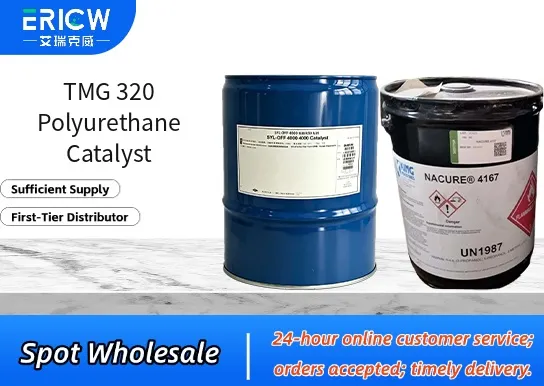
Highly selective tertiary amine catalyst optimized for polyol–isocyanate reaction kinetics.
Low volatility and reduced odor profile compared to traditional amine catalysts.
Excellent compatibility with aromatic and aliphatic polyurethane systems.
Enables balanced reactivity—promotes gelation without excessive blowing effect.
Stable in storage; non-corrosive to common processing equipment and packaging materials.
Flexible slabstock foam for bedding and furniture manufacturing.
Integral skin and RIM (Reaction Injection Molding) polyurethane parts.
Automotive seating and interior trim foams requiring low fogging emissions.
High-resilience (HR) foam formulations with controlled rise and cure profiles.
Water-blown and low-VOC polyurethane systems compliant with indoor air quality standards.
| Chemical Type | Tertiary amine catalyst (N,N,N′,N′-tetramethyl-1,3-propanediamine derivative) |
| Product Form | Liquid |
| Appearance | Clear, colorless to pale yellow liquid |
| Primary Applications | Gelation catalyst for flexible and semi-rigid polyurethane foams |
| Key Features | Low volatility, low odor, balanced gelling/blowing ratio |
| Benefits | Improved process stability, reduced emissions, enhanced foam cell structure |
| Density (25°C) | ~0.84–0.86 g/cm³ |
| Refractive Index (20°C) | 1.430–1.440 |
Q1: What is the primary function of TMG 320 in polyurethane systems?
A: TMG 320 is a tertiary amine catalyst specifically designed to promote the urethane reaction (isocyanate–polyol coupling), offering balanced reactivity and improved flow characteristics in flexible and semi-rigid foam formulations.
Q2: How does TMG 320 compare to traditional amine catalysts like DABCO® 33-LV or TEDA?
A: TMG 320 provides lower volatility and reduced odor compared to many conventional liquid amines, supporting improved worker safety and processing environments—while maintaining effective gelling activity and compatibility with common polyol/isocyanate blends.
Q3: Is TMG 320 suitable for low-emission or automotive interior applications?
A: Yes—its low volatility and favorable emission profile make it well-suited for formulations targeting reduced fogging and VOC emissions, commonly required in automotive and indoor air quality-sensitive applications.
Q4: What is the typical dosage range for TMG 320 in polyurethane foam formulations?
A: Dosage depends on formulation requirements and desired cure profile, but it is typically used at low concentrations—generally ranging from 0.1% to 2% by weight relative to total polyol solids.
Contact With Us:
E-mail: wangxingqiang@ericwchem.com
Have a Questions? Call Us:
Add:
Building A1, Jiete Industrial Park, Huangpu District, Guangzhou City, Guangdong Province, China