English
 Español
 tiếng việt
 русский
Highly selective palladium-based heterogeneous catalyst for efficient cross-coupling reactions.
Excellent thermal and chemical stability under standard industrial reaction conditions.
Consistent batch-to-batch performance with strict quality control per ISO 9001 manufacturing standards.
Low residual metal leaching, supporting stringent purity requirements in pharmaceutical intermediates synthesis.
Easy handling and storage as a free-flowing, non-hygroscopic solid under ambient conditions.
Carbon–carbon bond formation in active pharmaceutical ingredient (API) manufacturing.
Suzuki and Heck coupling reactions for fine chemical synthesis.
Production of agrochemical intermediates requiring high chemo-selectivity.
Electron-rich heterocycle functionalization in specialty polymer precursors.
Catalytic hydrogenation support in multi-step continuous flow processes.
| Chemical Type | Palladium on activated carbon (Pd/C), modified with proprietary ligand system |
| Product Form | Free-flowing black granular powder |
| Appearance | Uniform black granules, no visible dust or caking |
| Palladium Content | 3.0 ± 0.2 wt% (as measured by ICP-OES) |
| Moisture Content | < 1.0% (by Karl Fischer titration) |
| Particle Size Distribution | 80% retained on 100 µm sieve |
| Primary Applications | Cross-coupling catalysis in pharma, agrochemicals, and advanced materials |
| Storage Conditions | Store under inert atmosphere at 15–25 °C; keep container tightly closed |
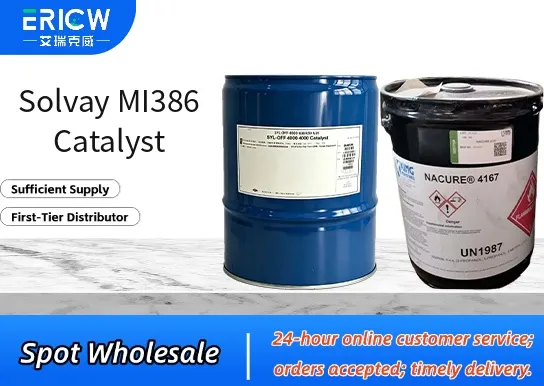
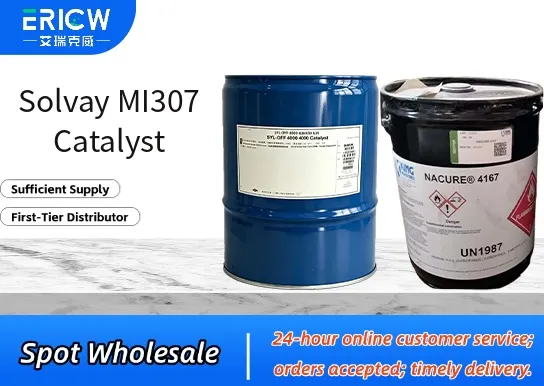
Q1: What is the primary application of Solvay MI307 Catalyst?
A: Solvay MI307 Catalyst is specifically designed to accelerate condensation-cure reactions in silicone elastomer systems, particularly for high-performance liquid silicone rubber (LSR) formulations used in medical, automotive, and precision industrial applications.
Q2: Is Solvay MI307 compatible with platinum-cure silicone systems?
A: No — Solvay MI307 is a tin-based catalyst formulated for condensation-cure silicones and is not intended for use in addition-cure (platinum-cure) systems. It may inhibit or interfere with platinum catalysts if cross-contaminated.
Q3: How should Solvay MI307 Catalyst be handled and stored?
A: Store in tightly sealed original containers under cool, dry conditions away from moisture, strong oxidizing agents, and direct sunlight. Handle using appropriate personal protective equipment (PPE), as it is moisture-sensitive and may hydrolyze upon prolonged exposure to ambient humidity.
Q4: What is the typical dosage range for Solvay MI307 in LSR formulations?
A: Dosage depends on formulation requirements and desired cure profile, but it is typically used at low concentrations — generally ranging from 0.1% to 2% by weight relative to the base polymer — and should be optimized via small-scale trials.
Contact With Us:
E-mail: wangxingqiang@ericwchem.com
Have a Questions? Call Us:
Add:
Building A1, Jiete Industrial Park, Huangpu District, Guangzhou City, Guangdong Province, China