English
 Español
 tiếng việt
 русский
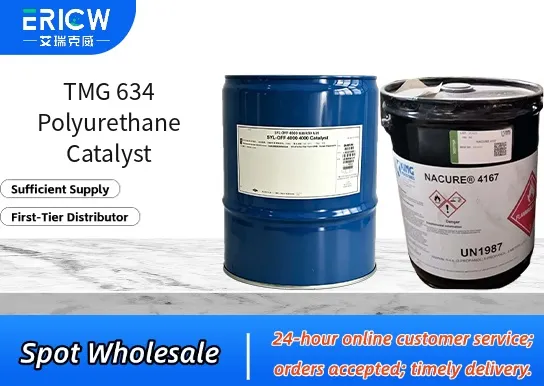
Highly selective tertiary amine catalyst optimized for polyol-isocyanate reactions in flexible and semi-rigid PU foams.
Excellent balance of creaming and gelling activity, enabling precise control over foam rise profile and cell structure.
Low volatility and minimal odor, supporting improved workplace safety and reduced VOC emissions during processing.
Good compatibility with common polyols, fillers, and flame retardants used in commercial PU formulations.
Stable performance across a wide temperature range (15–40 °C), ensuring consistent reactivity in varying production environments.
Flexible slabstock polyurethane foam for bedding and upholstered furniture.
Semi-rigid automotive seating foams requiring controlled flow and dimensional stability.
Integral skin foams for steering wheels, armrests, and instrument panels.
Water-blown molded foams where low fogging and low emission properties are critical.
Rebonded foam systems utilizing recycled PU scrap and aqueous binders.
| Chemical Type | Tertiary amine (N,N-dimethylcyclohexylamine derivative) |
| Product Form | Liquid |
| Appearance | Clear, pale yellow liquid |
| Primary Applications | Flexible & semi-rigid polyurethane foam systems |
| Key Features | Low-odor, low-volatility, balanced reactivity |
| Benefits | Improved foam uniformity, reduced post-cure shrinkage, enhanced worker safety |
| Density (25 °C) | ~0.89–0.91 g/cm³ |
| Storage Stability | Stable for ≥12 months at 15–25 °C in sealed containers |
Q1: What is the primary function of TMG 634 in polyurethane systems?
A: TMG 634 is a highly selective tertiary amine catalyst that promotes the urethane reaction (isocyanate–polyol coupling) while providing minimal acceleration of the urea-forming side reaction. This selectivity supports improved flow, reduced surface defects, and enhanced demold times in flexible and rigid foam applications.
Q2: Is TMG 634 compatible with moisture-cure or one-component PU systems?
A: Yes — TMG 634 is effective in both two-component and moisture-cure polyurethane formulations. Its low volatility and thermal stability allow it to remain active during extended processing windows and ambient or elevated cure conditions without premature depletion.
Q3: How does TMG 634 compare to traditional amine catalysts like DABCO® 33-LV or TEDA?
A: Unlike many volatile cyclic amines, TMG 634 offers lower vapor pressure and reduced odor profile, supporting safer handling and improved workplace air quality. It also delivers more balanced reactivity—especially in high-water-content flexible slabstock foams—where excessive gelling can lead to split cells or poor dimensional stability.
Q4: Can TMG 634 be used in low-VOC or bio-based polyurethane formulations?
A: Yes — TMG 634 is frequently selected for low-VOC and partially bio-based PU systems due to its non-volatile nature and compatibility with renewable polyols and low-emission isocyanates. It contributes to meeting stringent indoor air quality requirements without compromising catalytic efficiency.
Contact With Us:
E-mail: wangxingqiang@ericwchem.com
Have a Questions? Call Us:
Add:
Building A1, Jiete Industrial Park, Huangpu District, Guangzhou City, Guangdong Province, China