English
 Español
 tiếng việt
 русский
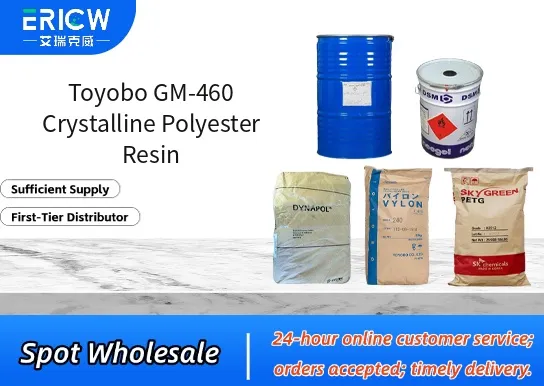
High crystallinity enabling rapid melt-solidification and excellent dimensional stability during processing.
Outstanding thermal resistance with continuous use temperature up to 150°C.
Low moisture absorption (<0.3% at 23°C/50% RH), ensuring consistent performance in humid environments.
Excellent chemical resistance to hydrocarbons, alcohols, and weak acids.
Good flow characteristics for precision injection molding of thin-walled and complex geometries.
Automotive under-hood components including sensor housings and connector bodies.
Electrical and electronic parts such as relay bases, terminal blocks, and insulating spacers.
Industrial fluid-handling components including pump impellers and valve bodies.
Consumer appliance structural parts requiring heat resistance and mechanical rigidity.
Medical device housings where dimensional accuracy and sterilization compatibility are critical.
| Chemical Type | Crytalline aromatic polyester (polybutylene terephthalate-based) |
| Product Form | Pellets |
| Appearance | Off-white, semi-crystalline granules |
| Melt Flow Rate (250°C/2.16 kg) | 12–16 g/10 min |
| Density | 1.31–1.33 g/cm³ |
| Crystallinity (DSC) | 38–42% |
| Tensile Strength (23°C) | 75–82 MPa |
| Heat Deflection Temperature (1.82 MPa) | 210–215°C |
Q1: What is the primary functional role of GM-460 in polymer formulations?
A: GM-460 serves as a crystalline nucleating agent and processing aid, enhancing melt crystallization kinetics, improving dimensional stability, and supporting faster cycle times in injection-molded polyethylene terephthalate (PET) and polybutylene terephthalate (PBT) parts.
Q2: Is GM-460 suitable for food-contact applications?
A: GM-460 is designed for use in polymers intended for food-contact applications where regulatory compliance is required; however, final compliance depends on the complete formulation, processing conditions, and applicable regional regulations — users must conduct appropriate migration testing and obtain formal regulatory clearance.
Q3: How does GM-460 differ from amorphous polyester additives?
A: Unlike amorphous additives, GM-460’s crystalline structure provides superior thermal stability during high-temperature processing and delivers more consistent nucleation performance across varying shear and cooling rates, particularly in fast-cycle molding operations.
Q4: What are recommended handling and storage conditions for GM-460?
A: Store in original sealed packaging under cool, dry conditions away from direct sunlight and sources of heat or moisture; avoid prolonged exposure to ambient humidity prior to use to maintain flowability and dispersion integrity.
Contact With Us:
E-mail: wangxingqiang@ericwchem.com
Have a Questions? Call Us:
Add:
Building A1, Jiete Industrial Park, Huangpu District, Guangzhou City, Guangdong Province, China