English
 Español
 tiếng việt
 русский
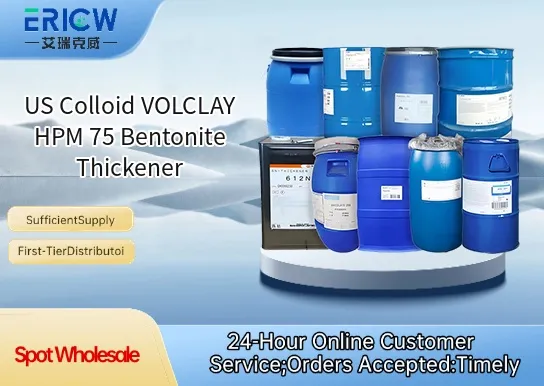
High-yield, sodium-activated bentonite with exceptional rheological control in aqueous systems.
Consistent thickening performance across variable pH (6.5–10.5) and low-to-moderate electrolyte concentrations.
Excellent suspension stability for insoluble solids in coatings, sealants, and construction slurries.
Low-dust, free-flowing granular form designed for simplified handling and dust-minimized blending.
Non-toxic, non-hazardous formulation compliant with major industrial safety and environmental guidelines.
Water-based architectural and industrial coatings requiring sag resistance and anti-settling properties.
Cementitious grouts and tile adhesives where viscosity build and thixotropy are critical for vertical application.
Oilfield drilling fluid additives for low-solids, high-performance bentonite-based viscosifiers.
Foundry mold washes and refractory coatings needing stable suspension of high-density fillers.
Adhesives and mastics requiring controlled open time and non-drip rheology during application.
| Chemical Type | Sodium-activated bentonite clay |
| Product Form | Free-flowing granules |
| Appearance | Light gray to tan granular powder |
| Primary Applications | Rheology modifier, suspending agent, thixotropic thickener |
| Key Features | High yield value, rapid hydration, shear-thinning behavior |
| Benefits | Improved sag resistance, reduced settling, enhanced storage stability |
| pH Range (1% dispersion) | 6.5 – 10.5 |
| Moisture Content (max) | 10.0 wt% |
Q1: What is the primary function of VOLCLAY HPM 75 in formulations?
A: VOLCLAY HPM 75 is a sodium-activated bentonite clay specifically engineered to provide efficient suspension, rheology control, and thixotropic structure in water-based systems. It imparts yield value and prevents settling of solids without requiring high shear for dispersion.
Q2: How does VOLCLAY HPM 75 differ from standard bentonite thickeners?
A: VOLCLAY HPM 75 features a controlled particle size distribution and optimized surface activation, enabling faster hydration, improved dispersion stability, and more consistent viscosity development—especially in low-shear or ambient-mixing conditions common in industrial coatings and construction additives.
Q3: Is VOLCLAY HPM 75 compatible with common co-additives like defoamers, biocides, or surfactants?
A: Yes—it demonstrates broad compatibility with typical formulation ingredients including nonionic and anionic surfactants, conventional defoamers, and common aqueous-phase biocides. However, performance should be verified in the final system due to potential interactions with highly cationic agents or strong electrolytes.
Q4: What are typical handling and storage recommendations?
A: Store in a cool, dry location in original sealed packaging to prevent moisture uptake. Avoid exposure to high humidity during handling, as premature hydration may reduce dispersion efficiency. Use appropriate dust control measures during dry blending.
Q5: Can VOLCLAY HPM 75 be used in environmentally sensitive or regulatory-restricted applications?
A: As a naturally derived, non-toxic mineral thickener, VOLCLAY HPM 75 supports formulators aiming for reduced reliance on synthetic polymers. It is not classified as hazardous under GHS and is widely accepted in industrial maintenance, agricultural adjuvants, and non-food-contact construction products—subject to end-use validation.
Contact With Us:
E-mail: wangxingqiang@ericwchem.com
Have a Questions? Call Us:
Add:
Building A1, Jiete Industrial Park, Huangpu District, Guangzhou City, Guangdong Province, China