English
 Español
 tiếng việt
 русский
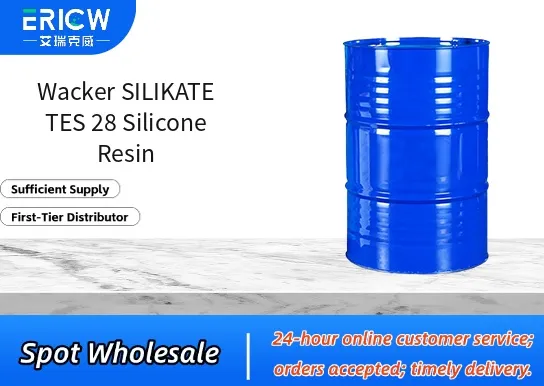
High thermal stability up to 250 °C for extended service life in demanding environments.
Excellent weather resistance and UV stability, maintaining performance under prolonged outdoor exposure.
Good compatibility with organic resins and pigments, enabling flexible formulation in hybrid coating systems.
Low surface energy and inherent hydrophobicity, providing water repellency and anti-dirt properties.
Solvent-based liquid form with controlled viscosity for easy integration into industrial coating and impregnation processes.
High-performance façade coatings for concrete and masonry substrates.
Heat-resistant topcoats for industrial equipment and exhaust components.
Water-repellent impregnation treatments for natural stone and porous building materials.
Binders in silicone-modified mineral plasters and renderings.
Base resin in maintenance coatings for infrastructure exposed to harsh climatic conditions.
| Chemical Type | Methyl-phenyl silicone resin |
| Product Form | Liquid, solvent-based solution |
| Appearance | Clear, colorless to pale yellow liquid |
| Solvent | Xylene / aromatic hydrocarbon mixture |
| Non-Volatile Content (wt.%) | ~28 ± 1 % |
| Viscosity (23 °C, DIN 53211) | ~20–30 mPa·s |
| Density (20 °C) | ~0.92–0.94 g/cm³ |
| Flash Point (PMCC) | ~35 °C |
Q1: What is the primary function of SILIKATE TES 28 in coating formulations?
A: SILIKATE TES 28 functions as a hydrophobic, heat-resistant silicone resin modifier that enhances weather resistance, water repellency, and surface durability—particularly in mineral-based coatings such as silicate paints and plasters.
Q2: Is SILIKATE TES 28 compatible with alkaline systems like potassium silicate binders?
A: Yes, it is specifically designed for compatibility with high-pH silicate systems and remains stable under alkaline conditions typical of mineral paint formulations.
Q3: How is SILIKATE TES 28 typically incorporated into a formulation?
A: It is generally added during the late-stage mixing phase, either as a pre-diluted dispersion or directly under moderate shear, and does not require catalysts or high-temperature curing to achieve functional performance.
Q4: Does SILIKATE TES 28 contribute to film formation or act solely as an additive?
A: It participates in co-film formation with inorganic binders, improving cohesion and reducing micro-cracking—rather than forming an independent organic film—and supports long-term integrity without compromising vapor permeability.
Contact With Us:
E-mail: wangxingqiang@ericwchem.com
Have a Questions? Call Us:
Add:
Building A1, Jiete Industrial Park, Huangpu District, Guangzhou City, Guangdong Province, China