English
 Español
 tiếng việt
 русский
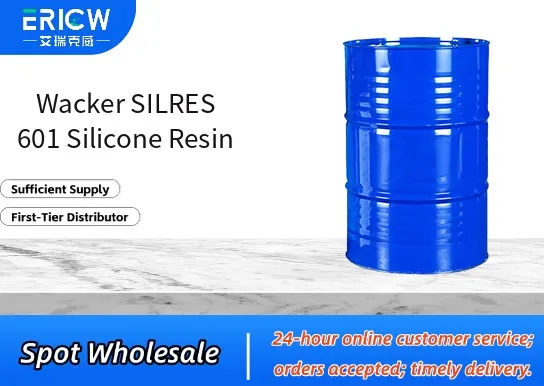
High thermal stability up to 250 °C continuous service temperature.
Excellent weather resistance and UV stability for long-term outdoor performance.
Good compatibility with organic resins including acrylics, alkyds, and polyesters.
Low surface energy enabling superior water repellency and anti-graffiti properties.
Solvent-based formulation (xylene/toluene blend) for easy integration into conventional coating systems.
High-performance architectural coatings for façades and concrete protection.
Heat-resistant coatings for industrial equipment and exhaust components.
Weatherable topcoats for metal roofing and cladding systems.
Hybrid silicone-acrylic facade renders and plasters.
Anti-corrosion primers and topcoats for infrastructure and marine environments.
| Chemical Type | Methyl/phenyl silicone resin |
| Product Form | Liquid solution |
| Appearance | Clear, colorless to pale yellow liquid |
| Solvent Content | Approx. 60 wt% in aromatic hydrocarbons (xylene/toluene) |
| Non-Volatile Content | Approx. 40 wt% |
| Viscosity (25 °C) | Approx. 20–30 mPa·s (Brookfield, spindle #1, 60 rpm) |
| Density (20 °C) | Approx. 0.92–0.95 g/cm³ |
| Flash Point (PMCC) | Approx. 40 °C |
Q1: What is the primary function of SILRES 601 in coating and ink formulations?
A: SILRES 601 functions primarily as a surface modifier and crosslinker, enhancing scratch resistance, mar resistance, and substrate wetting—especially on low-energy surfaces such as plastics and cured silicone layers.
Q2: Is SILRES 601 compatible with organic solvent-based systems?
A: Yes, SILRES 601 is fully soluble in common organic solvents including xylene, toluene, and aliphatic hydrocarbons, making it suitable for integration into conventional solvent-borne coatings, varnishes, and gravure or flexo inks.
Q3: How does SILRES 601 differ from standard silicone oils or emulsions?
A: Unlike linear silicone oils, SILRES 601 is a highly branched, reactive silicone resin with silanol and alkoxy functional groups—enabling covalent bonding into thermoset networks rather than merely migrating to the surface.
Q4: Can SILRES 601 be used in heat-cured systems?
A: Yes—it is designed for thermal curing applications, where it undergoes condensation reactions at elevated temperatures (typically above 120 °C), forming durable, three-dimensional silicone networks with improved thermal stability and hardness.
Q5: What is the recommended dosage range for optimal performance?
A: Dosage depends on formulation requirements and desired effect, but SILRES 601 is typically used at low concentrations—generally ranging from 0.1% to 2% by weight relative to total solids—to balance functionality without compromising film integrity or clarity.
Contact With Us:
E-mail: wangxingqiang@ericwchem.com
Have a Questions? Call Us:
Add:
Building A1, Jiete Industrial Park, Huangpu District, Guangzhou City, Guangdong Province, China