English
 Español
 tiếng việt
 русский
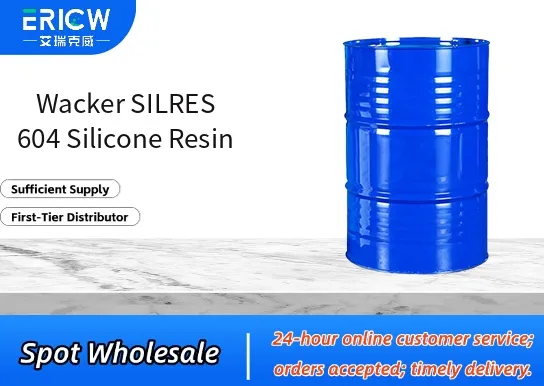
High thermal stability with continuous service temperature up to 250 °C.
Excellent electrical insulation properties even under humid or elevated temperature conditions.
Good compatibility with organic resins and pigments, enabling hybrid formulation design.
Solvent-based (xylene/toluene blend), facilitating easy integration into conventional coating and impregnation processes.
Forms hard, glossy, abrasion-resistant films upon curing without requiring high-temperature post-cure.
Electrical insulation coatings for motor windings and transformer components.
Heat-resistant varnishes for coil impregnation in industrial and automotive electric motors.
Binder in high-temperature resistant paints and ceramic coatings.
Matrix resin for glass fiber-reinforced composites used in exhaust system components.
Surface treatment agent for improving thermal and dielectric performance of laminated insulating materials.
| Chemical Type | Methyl-phenyl silicone resin |
| Product Form | Liquid solution |
| Appearance | Clear, colorless to pale yellow liquid |
| Solvent Content | Approx. 60–65 wt.% (xylene/toluene mixture) |
| Non-Volatile Content | 35–40 wt.% at 150 °C/60 min |
| Viscosity (25 °C) | 80–120 mPa·s (Brookfield RV, spindle #3, 6 rpm) |
| Density (20 °C) | 0.92–0.95 g/cm³ |
| Flash Point (PMCC) | Approx. 35 °C |
Q1: What is the primary function of SILRES 604 in coating and ink formulations?
A: SILRES 604 functions primarily as a surface modifier and crosslinking agent, enhancing scratch resistance, mar resistance, and substrate wetting while improving film hardness and chemical resistance without significantly compromising flexibility.
Q2: Is SILRES 604 compatible with common organic resin systems?
A: Yes, SILRES 604 exhibits good compatibility with a broad range of organic resins—including acrylics, polyesters, alkyds, and epoxy-based systems—enabling homogeneous incorporation without phase separation or haze formation under standard formulation conditions.
Q3: How is SILRES 604 typically incorporated into a formulation?
A: It is generally added during the let-down or post-addition stage, either neat or pre-diluted in a suitable solvent or reactive diluent. Mixing should be performed under moderate shear to ensure uniform dispersion before final homogenization.
Q4: Does SILRES 604 require thermal curing to develop its full performance benefits?
A: While it can provide some benefit at ambient temperatures, optimal crosslinking and performance enhancement—particularly in hardness, durability, and hydrophobicity—are achieved through thermal treatment, typically in the range of 120–180 °C depending on the base system and desired cure profile.
Q5: Can SILRES 604 be used in waterborne systems?
A: SILRES 604 is supplied as an organic-solvent-based liquid and is not inherently water-dispersible; however, it can be successfully integrated into waterborne systems using appropriate emulsification techniques or by incorporating it into hydrophobic resin phases prior to emulsion preparation.
Contact With Us:
E-mail: wangxingqiang@ericwchem.com
Have a Questions? Call Us:
Add:
Building A1, Jiete Industrial Park, Huangpu District, Guangzhou City, Guangdong Province, China