English
 Español
 tiếng việt
 русский
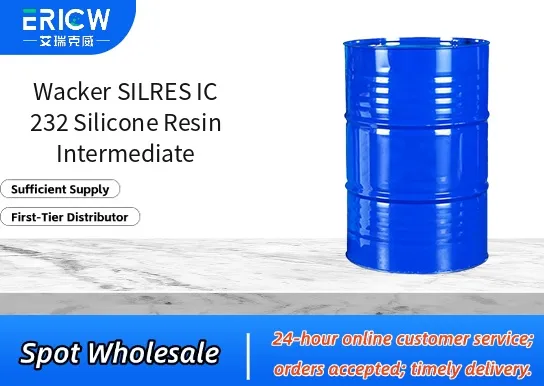
High thermal stability enabling performance in demanding high-temperature curing processes.
Excellent compatibility with organic resins including acrylics, epoxies, and alkyds.
Low viscosity liquid form facilitating easy handling, blending, and dispersion in formulations.
Reactive silanol groups providing strong crosslinking capability for enhanced film hardness and chemical resistance.
Hydrophobic character contributing to improved water repellency and weather resistance in final coatings.
High-performance heat-resistant coatings for industrial exhaust systems and engine components.
Weatherable topcoats for architectural metal cladding and façade systems.
Functional additives in hybrid silicone-organic protective coatings for infrastructure and transportation assets.
Binders or modifiers in ceramic and refractory coating formulations.
Crosslinking agents for silicone-modified polyester and acrylic resin systems.
| Chemical Type | Organofunctional silicone resin (methyl/phenyl/silanol-functional) |
| Product Form | Clear to slightly hazy liquid |
| Appearance | Colorless to pale yellow, homogeneous liquid |
| Primary Applications | Heat-resistant coatings, weatherproof topcoats, hybrid resin modification |
| Key Features | Reactive silanol groups, low volatility, solvent-free (neat) formulation |
| Benefits | Enhanced thermal stability, improved adhesion to metals, reduced VOC impact |
| Storage Conditions | Store in tightly closed containers at 5–30 °C; protect from moisture |
| Handling Precautions | Use in well-ventilated areas; avoid prolonged skin contact |
Q1: What is the primary function of SILRES IC 232 in coating and ink formulations?
A: SILRES IC 232 serves as a reactive silicone resin intermediate that imparts enhanced surface functionality—such as improved slip, mar resistance, and substrate wetting—when covalently incorporated into organic polymer networks via condensation or addition reactions.
Q2: Is SILRES IC 232 compatible with common industrial resins such as acrylics, polyesters, and alkyds?
A: Yes, SILRES IC 232 is designed for broad compatibility with thermosetting organic resins. Its reactive silanol groups enable effective co-condensation with hydroxyl- or carboxyl-functional binders under standard curing conditions, without requiring specialized catalysts in most cases.
Q3: How should SILRES IC 232 be stored and handled to maintain stability?
A: Store in tightly sealed original containers under dry, cool conditions (preferably below 30 °C) and protected from moisture. Prolonged exposure to ambient humidity may lead to premature condensation; therefore, handling under inert atmosphere or low-humidity environments is recommended for extended shelf life and consistent reactivity.
Q4: Can SILRES IC 232 be used in heat-cured versus ambient-cured systems?
A: SILRES IC 232 is suitable for both heat-cured and ambient-cured systems. Its reactivity increases significantly above 100 °C, enabling efficient crosslinking in baked coatings; however, it can also participate in slower room-temperature condensation when paired with suitable catalysts or highly reactive co-resins.
Q5: What are typical dosage ranges for SILRES IC 232 in finished formulations?
A: Dosage is formulation-dependent but generally ranges from 0.1% to 2% by weight relative to total non-volatile content. Lower levels often suffice for surface property modification, while higher additions may be used where deeper silicone integration or enhanced thermal/chemical resistance is targeted.
Contact With Us:
E-mail: wangxingqiang@ericwchem.com
Have a Questions? Call Us:
Add:
Building A1, Jiete Industrial Park, Huangpu District, Guangzhou City, Guangdong Province, China