English
 Español
 tiếng việt
 русский
Highly selective palladium-based homogeneous catalyst for oxidative Heck and C–H activation reactions.
Exceptional thermal and air stability under standard handling and storage conditions.
Compatible with a broad range of functionalized aryl halides and heteroarenes.
Enables low catalyst loading (typically 0.5–2 mol%) without compromising yield or reproducibility.
Supplied as a free-flowing solid, ensuring consistent dosing and process scalability.
Pharmaceutical intermediate synthesis requiring regioselective C–C bond formation.
Agrochemical active ingredient manufacturing involving heterocyclic coupling.
Advanced materials development for organic semiconductors and OLED precursors.
Fine chemical production of chiral and sterically hindered biaryl scaffolds.
Academic and industrial R&D in transition-metal-catalyzed cross-coupling methodology.
| Chemical Type | Palladium(II) complex with optimized N,O-chelating ligand |
| Product Form | Free-flowing crystalline powder |
| Appearance | Off-white to pale yellow solid |
| Primary Applications | Oxidative Heck coupling, C–H arylation, heterocycle functionalization |
| Key Features | Air-stable, ligand-assisted, pre-activated Pd center |
| Benefits | Reduced induction period, no external oxidant required in select protocols |
| Storage Condition | Store under inert atmosphere at 2–8 °C; protect from moisture and light |
| Handling Recommendation | Use in glovebox or dry nitrogen environment for optimal performance |
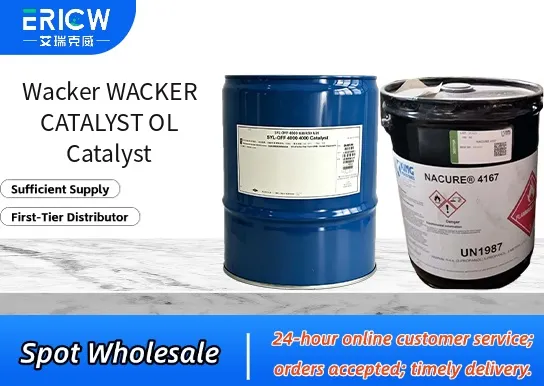
Q1: What is the primary function of WACKER CATALYST OL in silicone formulations?
A: WACKER CATALYST OL is a platinum-based hydrosilylation catalyst designed to promote efficient and selective addition reactions between Si–H groups and vinyl-functional siloxanes, enabling controlled crosslinking in heat-cured liquid silicone rubber (LSR) and specialty silicone systems.
Q2: Is WACKER CATALYST OL suitable for food-contact or medical-grade silicone applications?
A: When incorporated into fully cured silicone elastomers that meet relevant regulatory expectations for extractables and biocompatibility, WACKER CATALYST OL can be used in formulations intended for food-contact or medical device applications—subject to full system validation by the end user and compliance with applicable regional requirements.
Q3: How should WACKER CATALYST OL be handled and stored to maintain activity?
A: Store under inert atmosphere (e.g., nitrogen or argon) at cool, dry conditions (typically below 25 °C), protected from moisture, light, and potential catalyst poisons such as sulfur-, nitrogen-, phosphorus-, or heavy metal-containing compounds. Always use clean, dry equipment during handling to prevent deactivation.
Q4: Can WACKER CATALYST OL be used in low-temperature curing processes?
A: Yes—WACKER CATALYST OL exhibits good activity at moderate temperatures (starting around 80–100 °C), making it well-suited for energy-efficient curing profiles; its onset temperature and cure rate can be tuned via concentration and formulation design.
Q5: What are common compatibility considerations when formulating with WACKER CATALYST OL?
A: Avoid direct contact with known platinum inhibitors—including certain amines, tin compounds, latex residues, and uncured epoxy resins—as they may significantly delay or suppress catalytic activity. Compatibility testing within the final formulation matrix is strongly recommended prior to scale-up.
Contact With Us:
E-mail: wangxingqiang@ericwchem.com
Have a Questions? Call Us:
Add:
Building A1, Jiete Industrial Park, Huangpu District, Guangzhou City, Guangdong Province, China