English
 Español
 tiếng việt
 русский
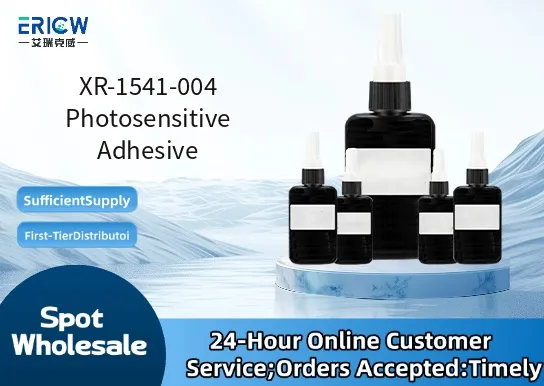
High-resolution patterning capability with sub-25 µm feature definition under standard UV exposure (i-line, 365 nm).
Excellent thermal stability up to 220 °C post-cure, enabling compatibility with high-temperature backend processing.
Low outgassing profile in vacuum environments, certified per ASTM E595 for space-grade applications.
Fast development in aqueous alkaline solutions (0.26 N TMAH), reducing process cycle time and environmental impact.
Tailored adhesion to silicon, glass, stainless steel, and polyimide substrates without primers.
Micromachined sensor packaging (e.g., MEMS pressure, accelerometer, and gyroscope devices).
Wafer-level bonding for 3D integration and through-silicon via (TSV) encapsulation.
Photolithographic stencils and microfluidic channel sealing layers in lab-on-chip systems.
Temporary bonding/debonding in carrier wafer processes for ultra-thin die handling.
Hermetic cavity sealing for optoelectronic and RF components requiring moisture barrier integrity.
| Chemical Type | Novolac-based positive-tone photoresist with crosslinkable epoxy functionality |
| Product Form | Ready-to-use liquid solution (solvent: PGMEA) |
| Appearance | Clear, pale yellow viscous liquid |
| Viscosity (25 °C) | 18–22 cP (Brookfield LV, spindle #18, 60 rpm) |
| Solid Content | 28–32 wt% |
| Primary Applications | Photo-definable adhesive for temporary bonding, cavity sealing, and precision patterning |
| Key Features | UV-curable, thermally stable, low ionic contamination (Na⁺ & K⁺ < 5 ppm) |
| Regulatory Compliance | REACH SVHC-free; RoHS 2015/863 compliant; halogen-free per IEC 61249-2-21 |
| Common Compatible Systems | Suitability |
| Canon FPA-3030i5a Stepper (i-line, 365 nm) | Highly Recommended – Optimized exposure dose: 120–160 mJ/cm² |
| ASML PAS 5500/300 Scanner (with i-line filter) | Recommended – Requires minor focus calibration; resolution maintained ≤ 20 µm |
| Screen-printed copper foil lamination lines (e.g., Dainippon Screen M-1200) | Suitable – Compatible with standard hot-roll laminators (100–120 °C, 0.3 MPa) |
| Wet bench development systems (e.g., Tokyo Electron ACT 8) | Highly Recommended – Fully compatible with standard TMAH developers and DI rinse modules |
Q1: What is the CAS Registry Number for XR-1541-004?
A: The CAS Number for XR-1541-004 Photosensitive Adhesive is 2272731-88-4.
Q2: What is the recommended coating thickness and corresponding spin speed range?
A: For 10–12 µm dry film thickness, spin coat at 2500–3000 rpm for 30 seconds; final thickness is adjustable between 8–25 µm via spin speed and solids content tuning.
Q3: How does XR-1541-004 compare to conventional BCB (benzocyclobutene) adhesives in terms of resolution and process safety?
A: XR-1541-004 achieves higher resolution (≤20 µm vs. ≥40 µm for typical BCB) and eliminates high-temperature curing (>250 °C); it cures fully at 180 °C for 60 min and contains no volatile aromatic amines or phenolic byproducts.
Q4: Is XR-1541-004 suitable for food-contact or medical device packaging applications?
A: No — XR-1541-004 is not certified for direct food contact or implantable medical use. It is designed for industrial semiconductor and microsystem packaging only; migration testing per USP <87> and ISO 10993-12 is not performed.
Q5: Does XR-1541-004 exhibit measurable extractables under IPC-TM-650 2.3.26 conditions?
A: Yes — total organic extractables are < 120 ppm when tested per IPC-TM-650 2.3.26 (reflux in isopropanol, 2 hr); ionic extractables (Cl⁻, SO₄²⁻, NO₃⁻) are below detection limits (< 0.5 ppm each).
Contact With Us:
E-mail: wangxingqiang@ericwchem.com
Have a Questions? Call Us:
Add:
Building A1, Jiete Industrial Park, Huangpu District, Guangzhou City, Guangdong Province, China