English
 Español
 tiếng việt
 русский
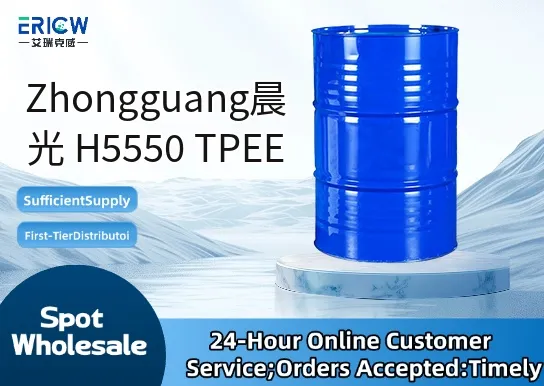
Excellent balance of thermoplastic processability and elastomeric performance.
High tensile strength and outstanding resilience at elevated temperatures.
Good resistance to oils, greases, and common industrial chemicals.
Low compression set for durable sealing and dynamic component applications.
Compatible with standard thermoplastic processing methods including injection molding and extrusion.
Automotive under-hood components such as air ducts and fluid handling connectors.
Industrial hoses and bellows requiring fatigue resistance and dimensional stability.
High-performance seals and gaskets in hydraulic and pneumatic systems.
Consumer electronics casings and protective covers demanding impact absorption and surface finish.
Medical tubing and device housings where biocompatibility-supporting grades are certified.
| Chemical Type | Thermoplastic Polyester Elastomer (TPEE) |
| Product Form | Pellets |
| Appearance | Off-white to light yellow granules |
| Primary Applications | Dynamic mechanical parts, seals, hoses, and structural elastomeric components |
| Key Features | High melt flow index, excellent creep resistance, good low-temperature flexibility |
| Benefits | Reduced cycle times vs. thermoset elastomers; recyclable scrap; consistent batch-to-batch performance |
| Processing Method | Injection molding, extrusion, blow molding |
| Storage Conditions | Store in dry, cool environment (<25°C); keep sealed to prevent moisture absorption |
Q1: What are the key processing advantages of Zhongguang H5550 TPEE compared to conventional TPEEs?
A: Zhongguang H5550 TPEE offers improved melt flow stability and reduced thermal sensitivity during extrusion and injection molding, enabling smoother processing at moderate temperatures and shorter cycle times. Its balanced hard-segment content supports consistent dimensional control and low post-molding shrinkage in precision parts.
Q2: Is H5550 suitable for applications requiring repeated flexing or dynamic mechanical stress?
A: Yes — H5550 is engineered with enhanced chain mobility and resilient phase separation, delivering excellent fatigue resistance and long-term retention of tensile recovery under cyclic bending or torsional loading, making it well-suited for automotive bellows, sporting goods components, and flexible industrial hoses.
Q3: How does H5550 perform in environments with intermittent exposure to oils and greases?
A: H5550 exhibits good short- to medium-term resistance to non-polar hydrocarbon-based lubricants and greases due to its optimized polyether soft segment and aromatic polyester hard domain structure. Prolonged immersion or high-temperature contact may affect physical properties, so application-specific validation is recommended.
Q4: Can H5550 be overmolded onto common engineering thermoplastics like PP, ABS, or PC?
A: H5550 demonstrates reliable adhesion to many polar and semi-crystalline substrates when processed with appropriate mold temperature, surface cleanliness, and interfacial compatibility tuning. Bond strength to PP typically benefits from substrate flame or plasma treatment, while adhesion to ABS and PC is generally favorable without primers under standard two-shot conditions.
Contact With Us:
E-mail: wangxingqiang@ericwchem.com
Have a Questions? Call Us:
Add:
Building A1, Jiete Industrial Park, Huangpu District, Guangzhou City, Guangdong Province, China