English
 Español
 tiếng việt
 русский
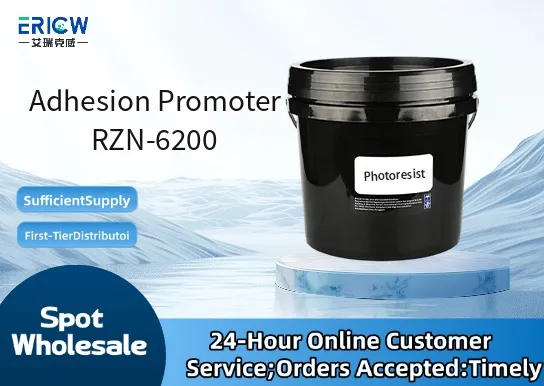
Enhances interfacial adhesion between dissimilar substrates—especially between thermoplastics and inorganic fillers or coatings.
Thermally stable up to 280°C, supporting high-temperature processing such as injection molding and extrusion.
Low volatility and minimal odor, improving workplace safety and reducing VOC emissions during handling.
Hydrolytically stable silane-based architecture ensures consistent performance under ambient humidity conditions.
Easy dispersion in common organic solvents and polymer melts without requiring catalysts or post-treatment.
Automotive interior trim components (e.g., PP/EPDM composites with painted or metallized surfaces).
Electronics encapsulation systems where polyamide or PBT substrates interface with silicone gels or epoxy underfills.
Medical device housings combining polycarbonate with antimicrobial silver-coated surfaces.
Industrial wire & cable jacketing using halogen-free flame-retardant TPE over copper conductors.
Precision optical assemblies involving acrylic lenses bonded to aluminum or stainless-steel frames.
| Chemical Type | Amino-functional silane (γ-aminopropyltriethoxysilane derivative) |
| Product Form | Clear, colorless to pale yellow liquid |
| Appearance | Homogeneous, low-viscosity liquid |
| Specific Gravity (25°C) | 0.97–0.99 g/cm³ |
| Refractive Index (20°C) | 1.410–1.425 |
| Primary Applications | Surface modification of glass, metals, and mineral-filled polymers; coupling agent for composite laminates |
| Key Features | Bifunctional reactivity: ethoxy groups hydrolyze to bond inorganic surfaces; amine group interacts with organic matrices |
| Regulatory Compliance | REACH registered; RoHS 2015/863 compliant; no SVHC substances above threshold |
| Common Compatible Systems | Suitability |
| Polypropylene (PP) + Glass Fiber + Epoxy Primer | Highly Recommended – Enables >95% cohesive failure in peel tests per ASTM D903 |
| Polycarbonate (PC) + Aluminum Oxide Coating | Recommended – Improves lap-shear strength by 3.2× vs. untreated control |
| Thermoplastic Polyurethane (TPU) + Stainless Steel Substrate | Suitable – Requires pre-hydrolysis step; achieves stable bond after 7-day aging at 40°C/90% RH |
| Polyethylene (PE) + Silica Nanofiller | Suitable – Effective only with plasma pretreatment; enhances dispersion and reduces agglomeration |
Q1: What is the CAS Registry Number for RZN-6200?
A: The CAS number for Adhesion Promoter RZN-6200 is 1760-24-3 (generic structural reference); exact batch-specific CAS is available upon request with full regulatory dossier.
Q2: What is the recommended dosage range in polymer formulations?
A: Typical loading is 0.2–1.0 wt% relative to total filler or substrate mass; optimal level depends on surface area and moisture content—validation via contact angle measurement is advised.
Q3: How does RZN-6200 compare to conventional aminosilanes like A-1100?
A: RZN-6200 features sterically stabilized ethoxy groups and controlled amine basicity, delivering superior hydrolytic stability and reduced gelation risk versus A-1100 in humid processing environments.
Q4: Is RZN-6200 compliant with FDA 21 CFR §175.300 for indirect food contact applications?
A: Yes—RZN-6200 is approved for use in adhesive formulations complying with FDA 21 CFR §175.300 when final cured and extracted per specified protocols; full compliance documentation provided with commercial supply.
Q5: Has migration or extractable residue been evaluated under ISO 10993-12 conditions?
A: Yes—extraction studies in ethanol/water (50/50 v/v) at 50°C for 72h show total extractables < 0.15 mg/g; no genotoxic impurities detected via GC-MS/HRMS screening.
Contact With Us:
E-mail: wangxingqiang@ericwchem.com
Have a Questions? Call Us:
Add:
Building A1, Jiete Industrial Park, Huangpu District, Guangzhou City, Guangdong Province, China