English
 Español
 tiếng việt
 русский
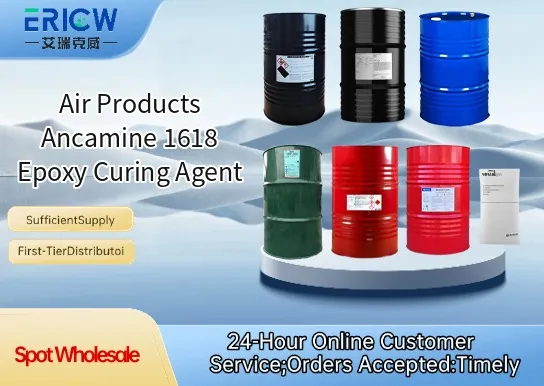
Fast-reacting aliphatic amine curing agent enabling rapid room-temperature cure of epoxy resins.
Low viscosity for easy handling, precise metering, and excellent compatibility with standard epoxy systems.
Provides superior mechanical properties including high tensile strength and impact resistance in cured films.
Low volatility and reduced amine odor compared to conventional aliphatic amines—improving workplace safety and operator comfort.
Excellent adhesion to metals, concrete, and composite substrates without primer requirement.
Industrial flooring and protective coatings for warehouses, garages, and manufacturing facilities.
Electrical encapsulation and potting compounds for transformers, busbars, and power electronics.
Structural adhesives used in transportation and wind energy composite bonding.
Repair mortars and grouts for concrete infrastructure rehabilitation.
High-performance tooling and mold-making materials in composites manufacturing.
| Chemical Type | Aliphatic polyamine |
| Product Form | Liquid |
| Appearance | Clear, pale yellow liquid |
| Primary Applications | Epoxy coatings, adhesives, and castings |
| Key Features | Rapid ambient cure, low viscosity, low odor |
| Benefits | Improved productivity, enhanced worker safety, excellent substrate adhesion |
| Reactivity Profile | Compatible with standard DGEBA and modified epoxy resins |
| Storage Stability | 12 months unopened at 20–25°C |
Q1: What type of amine chemistry does Ancamine 1618 feature, and how does it influence cure performance?
A: Ancamine 1618 is a low-viscosity, aliphatic polyamine-based curing agent designed for ambient- or elevated-temperature epoxy cures. Its molecular structure provides balanced reactivity—faster than traditional DETA but with improved pot life and reduced volatility—making it suitable for coatings, adhesives, and composites where handling time and film formation are critical.
Q2: Is Ancamine 1618 compatible with standard bisphenol-A and bisphenol-F epoxy resins?
A: Yes, Ancamine 1618 demonstrates broad compatibility with common liquid and solid epoxy resins, including diglycidyl ether of bisphenol-A (DGEBA) and bisphenol-F (DGEBF). It typically delivers good mechanical properties, chemical resistance, and adhesion without requiring complex resin pre-treatment or co-catalysts.
Q3: How does Ancamine 1618 compare to conventional amine hardeners in terms of odor and workplace safety?
A: Compared to many primary aliphatic amines, Ancamine 1618 offers significantly lower volatility and amine odor, contributing to improved operator comfort and reduced ventilation requirements during handling and application. While it remains an amine compound requiring appropriate PPE and industrial hygiene practices, its formulation reflects Air Products’ focus on safer, more user-friendly epoxy curing solutions.
Q4: Can Ancamine 1618 be used in moisture-sensitive applications such as concrete primers or underwater repair systems?
A: Ancamine 1618 exhibits moderate tolerance to ambient moisture and can be formulated into systems for damp-surface applications, including concrete primers and certain repair mortars. However, it is not classified as a true “moisture-cure” hardener; optimal performance is achieved under controlled humidity conditions, and formulators should evaluate substrate preparation and environmental exposure during development.
Contact With Us:
E-mail: wangxingqiang@ericwchem.com
Have a Questions? Call Us:
Add:
Building A1, Jiete Industrial Park, Huangpu District, Guangzhou City, Guangdong Province, China