English
 Español
 tiếng việt
 русский
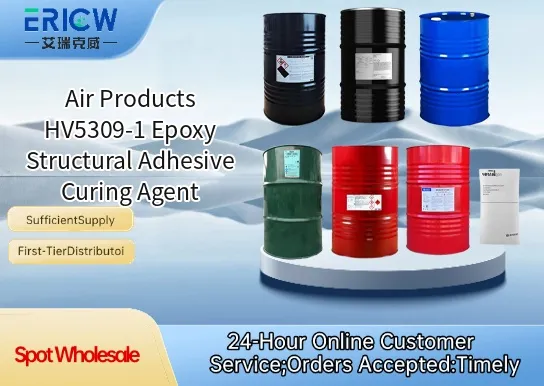
High reactivity with standard bisphenol-A and bisphenol-F epoxy resins, enabling rapid gelation and efficient cure cycles.
Excellent thermal stability and long-term durability in demanding structural bonding environments.
Low volatility and low odor profile, supporting safer handling and improved workplace air quality.
Consistent stoichiometric performance across batch variations, ensuring reliable adhesive formulation reproducibility.
Enhanced moisture tolerance during application, reducing sensitivity to ambient humidity fluctuations.
Aerospace composite bonding, including carbon fiber–to–metal and skin-to–frame assemblies.
Automotive structural adhesives for lightweight body-in-white (BIW) and battery pack assembly.
Rail vehicle manufacturing for interior panel bonding and undercarriage component attachment.
Wind energy applications, such as blade root bonding and spar cap adhesive systems.
Industrial equipment fabrication requiring high-strength, fatigue-resistant joints.
| Chemical Type | Aliphatic amine-based curing agent |
| Product Form | Liquid |
| Appearance | Clear to pale yellow, homogeneous liquid |
| Primary Applications | Structural epoxy adhesives for composites and metals |
| Key Features | Fast-reacting, low-viscosity, moisture-tolerant |
| Benefits | Improved production throughput, consistent bond strength, reduced VOC emissions |
| Storage Conditions | Store at 15–25°C in original sealed container; protect from moisture |
| Shelf Life | 12 months from date of manufacture when stored properly |
Q1: What is the primary function of HV5309-1 in epoxy structural adhesive systems?
A: HV5309-1 is a high-performance curing agent designed to initiate and control the crosslinking reaction of epoxy resins, enabling the development of strong, durable, and thermally stable structural bonds—particularly in demanding industrial assembly applications.
Q2: How does HV5309-1 compare to conventional amine-based curing agents in terms of reactivity and handling?
A: HV5309-1 offers moderated reactivity compared to highly reactive aliphatic amines, providing extended working time (pot life) while still supporting efficient cure at ambient or elevated temperatures. Its formulation is engineered for improved handling safety and reduced volatility relative to many traditional alternatives.
Q3: What types of epoxy resins is HV5309-1 typically compatible with?
A: HV5309-1 is broadly compatible with standard liquid and solid bisphenol-A and bisphenol-F epoxy resins, as well as many modified epoxy systems—including those used in aerospace, automotive, and wind energy bonding applications.
Q4: What are typical dosage guidelines when formulating with HV5309-1?
A: Dosage depends on the specific resin system, desired cure profile, and end-use performance requirements. It is generally used at low concentrations—typically ranging from 0.1% to 2% by weight relative to the epoxy resin—and should be optimized through small-scale formulation trials.
Q5: Is HV5309-1 suitable for applications requiring compliance with food-contact or medical device regulations?
A: HV5309-1 is not specifically developed or certified for direct food-contact or implantable medical device applications. Customers intending use in regulated environments must conduct full regulatory evaluation—including compatibility, extractables, and toxicological assessment—as part of their own qualification process.
Contact With Us:
E-mail: wangxingqiang@ericwchem.com
Have a Questions? Call Us:
Add:
Building A1, Jiete Industrial Park, Huangpu District, Guangzhou City, Guangdong Province, China