English
 Español
 tiếng việt
 русский
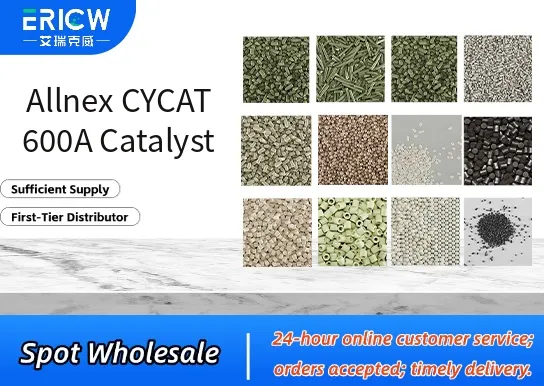
Highly efficient acid catalyst for melamine-formaldehyde and urea-formaldehyde resin condensations.
Enables rapid cure at low temperatures, improving energy efficiency in industrial coating processes.
Excellent compatibility with amino resins and solvent-based baking systems.
Delivers consistent film hardness and crosslink density without excessive brittleness.
Low volatility formulation minimizes oven emissions and supports VOC-reduction initiatives.
Automotive OEM clearcoats and basecoats requiring fast-cure, high-gloss finishes.
Industrial coil coatings for pre-painted metal substrates.
Appliance coatings on refrigerators, washing machines, and HVAC components.
General-purpose baking enamels for metal furniture and office equipment.
Can coatings for food and beverage containers requiring FDA-compliant cure profiles.
| Chemical Type | Para-toluenesulfonic acid (p-TSA) derivative |
| Product Form | Liquid |
| Appearance | Clear, colorless to pale yellow liquid |
| Primary Applications | Amino resin crosslinking in thermosetting coatings |
| Key Features | Low-temperature reactivity, thermal latency, hydrolytic stability |
| Benefits | Improved pot life, reduced oven dwell time, enhanced edge coverage |
| Solubility | Miscible with common organic solvents (e.g., xylene, butyl acetate, glycol ethers) |
| Storage Conditions | Store in original sealed container at 5–30 °C; protect from moisture |
Q1: What is the primary function of CYCAT 600A in coating formulations?
A: CYCAT 600A is a highly active acid catalyst designed to accelerate the crosslinking reaction between melamine-formaldehyde resins and hydroxyl-functional binders—commonly used in thermosetting coil, can, and general industrial coatings.
Q2: How should CYCAT 600A be incorporated into a coating system?
A: It is typically added during the let-down stage under ambient or slightly elevated temperatures, with good agitation to ensure homogeneous dispersion. Pre-dilution in a compatible solvent or resin solution is recommended to avoid localized over-catalysis.
Q3: Is CYCAT 600A suitable for low-bake or ambient-cure applications?
A: While it exhibits strong catalytic activity at conventional cure temperatures (140–200 °C), its reactivity profile makes it less ideal for true ambient-cure systems. For lower-temperature baking, formulation optimization—including resin selection and co-catalyst use—is often required.
Q4: Does CYCAT 600A impact pot life or storage stability of two-component systems?
A: Yes—due to its strong acidity, it can reduce pot life when added to reactive mixtures prior to application. For optimal shelf stability, it is generally recommended to add CYCAT 600A as a final component just before use or to formulate it into stable masterbatches.
Q5: What are typical dosage guidelines for CYCAT 600A?
A: Dosage depends on formulation requirements, resin type, and desired cure profile, but it is generally used at low concentrations—typically ranging from 0.1% to 2.0% by weight relative to total non-volatile content.
Contact With Us:
E-mail: wangxingqiang@ericwchem.com
Have a Questions? Call Us:
Add:
Building A1, Jiete Industrial Park, Huangpu District, Guangzhou City, Guangdong Province, China