English
 Español
 tiếng việt
 русский
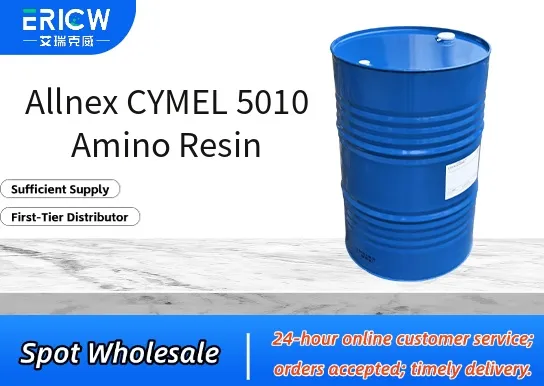
Highly reactive melamine-formaldehyde resin with excellent crosslinking efficiency at low curing temperatures.
Outstanding storage stability in solvent-based and high-solids coating systems.
Provides superior hardness, chemical resistance, and gloss retention in thermoset coatings.
Low formaldehyde emission profile, supporting compliance with stringent environmental and safety regulations.
Excellent compatibility with alkyds, acrylics, polyesters, and other common binder resins.
Automotive OEM and refinish topcoats requiring rapid cure and high durability.
Industrial maintenance coatings for metal substrates including appliances and furniture.
Can and coil coatings where corrosion resistance and baking efficiency are critical.
General-purpose baking enamels for metal packaging and decorative metalware.
High-performance powder coating hybrid systems (when formulated with polyester resins).
| Chemical Type | Melamine-formaldehyde crosslinker |
| Product Form | Clear to pale yellow liquid |
| Appearance | Homogeneous, low-viscosity liquid |
| Primary Applications | Baking coatings for metal substrates |
| Key Features | Low-cure reactivity, high crosslink density, low free formaldehyde |
| Benefits | Energy-efficient curing, enhanced film hardness, improved weatherability |
| Solubility | Compatible with common organic solvents (e.g., xylene, butanol, esters) |
| Recommended Cure Range | 120–160 °C (2–30 minutes, depending on formulation) |
Q1: What is the primary function of CYMEL 5010 in coating formulations?
A: CYMEL 5010 functions as a highly reactive melamine-formaldehyde crosslinker, enabling rapid cure at moderate temperatures and delivering excellent hardness, chemical resistance, and gloss retention in thermosetting coatings—particularly for coil, automotive refinish, and general industrial applications.
Q2: Is CYMEL 5010 compatible with hydroxyl-functional acrylics and polyesters?
A: Yes, CYMEL 5010 exhibits broad compatibility with hydroxyl-terminated resins, including acrylics, polyesters, and alkyds. It offers good storage stability in solvent-borne systems and cures efficiently when catalyzed with conventional acidic catalysts such as p-toluenesulfonic acid or blocked acids.
Q3: How does CYMEL 5010 compare to other melamine crosslinkers in terms of reactivity and pot life?
A: CYMEL 5010 provides a balanced profile—higher reactivity than fully alkylated low-reactivity melamines but longer pot life than highly reactive monomeric types. This makes it well-suited for high-solids and ambient-to-moderate bake applications where formulation stability and controlled cure are both critical.
Q4: Can CYMEL 5010 be used in low-VOC or high-solids coating systems?
A: Yes—CYMEL 5010 is formulated to support low-VOC and high-solids requirements due to its high solids content and low volatile organic content. It enables formulators to reduce solvent demand while maintaining robust film performance and efficient crosslinking efficiency.
Contact With Us:
E-mail: wangxingqiang@ericwchem.com
Have a Questions? Call Us:
Add:
Building A1, Jiete Industrial Park, Huangpu District, Guangzhou City, Guangdong Province, China