English
 Español
 tiếng việt
 русский
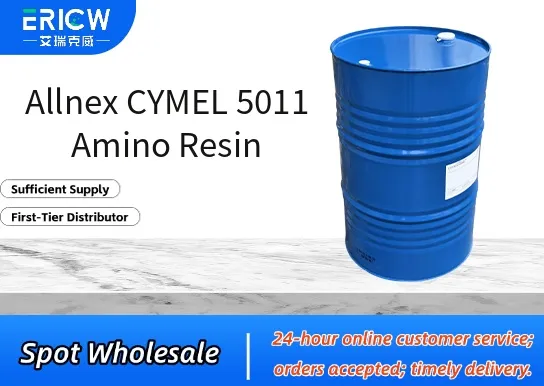
Highly reactive melamine-formaldehyde resin offering rapid cure kinetics at low to moderate baking temperatures.
Excellent compatibility with a broad range of acrylic, polyester, and alkyd resins in solventborne and high-solids coating systems.
Delivers superior hardness, chemical resistance, and gloss retention in thermoset coatings.
Low formaldehyde emission profile, supporting compliance with stringent environmental and occupational health requirements.
Consistent batch-to-batch performance and excellent storage stability under recommended conditions.
Automotive OEM and refinish topcoats requiring high durability and appearance.
Industrial metal coatings for appliances, HVAC units, and office furniture.
Can coatings for food and beverage containers where FDA-compliant formulations are required.
Coil coatings for architectural and building products demanding excellent formability and weather resistance.
General-purpose baked enamels for metal substrates across manufacturing sectors.
| Chemical Type | Melamine-formaldehyde crosslinker |
| Product Form | Liquid |
| Appearance | Clear, water-white to pale yellow liquid |
| Non-Volatile Content (wt%) | 80–84% |
| Viscosity (mPa·s, 25°C) | 50–150 |
| Density (g/cm³, 25°C) | 1.22–1.26 |
| pH (10% aqueous solution) | 7.5–9.0 |
| Primary Applications | Thermosetting coatings for metal substrates |
Q1: What is the primary function of CYMEL 5011 in coating formulations?
A: CYMEL 5011 is a highly reactive melamine-formaldehyde crosslinker designed to enhance hardness, chemical resistance, and thermal stability in thermosetting coatings—particularly in high-performance industrial and coil coating systems.
Q2: Is CYMEL 5011 compatible with hydroxyl-functional acrylic and polyester resins?
A: Yes, CYMEL 5011 exhibits excellent compatibility and reactivity with standard hydroxyl-terminated acrylic, polyester, and alkyd resins, enabling efficient curing at moderate bake temperatures typical for metal finishing applications.
Q3: How should CYMEL 5011 be stored to maintain optimal performance?
A: Store in tightly sealed containers in a cool, dry place away from direct sunlight and sources of heat or moisture. Prolonged exposure to elevated temperature or humidity may accelerate self-condensation and reduce shelf life.
Q4: Does CYMEL 5011 require an acid catalyst for curing, and if so, what types are commonly used?
A: Yes, effective cure typically requires a strong acid catalyst such as p-toluenesulfonic acid (p-TSA) or blocked sulfonic acids. Catalyst selection and dosage depend on the specific resin system, desired pot life, and cure schedule.
Q5: Can CYMEL 5011 be used in low-bake or ambient-cure systems?
A: While optimized for conventional thermal cure (typically 140–180 °C), CYMEL 5011 can be formulated for lower-temperature cures using highly active catalysts and reactive co-resins—but extended cure times or reduced performance attributes may result compared to standard bake conditions.
Contact With Us:
E-mail: wangxingqiang@ericwchem.com
Have a Questions? Call Us:
Add:
Building A1, Jiete Industrial Park, Huangpu District, Guangzhou City, Guangdong Province, China