English
 Español
 tiếng việt
 русский
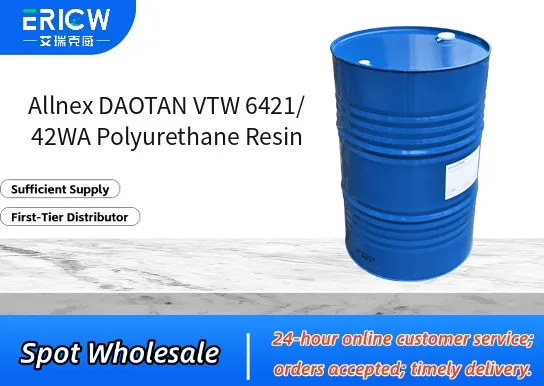
Waterborne aliphatic polyurethane dispersion offering excellent UV resistance and long-term gloss retention.
Low VOC formulation compliant with stringent global environmental regulations including EU REACH and US EPA guidelines.
Good hydrolytic stability and compatibility with common co-binders such as acrylics and melamine-formaldehyde resins.
Enables high film hardness and mar resistance while maintaining flexibility and substrate adhesion on wood, metal, and plastic.
Optimized for ambient-temperature or low-bake curing, supporting energy-efficient industrial coating processes.
High-performance waterborne topcoats for interior and exterior architectural wood finishes.
Protective clear coats for furniture, kitchen cabinets, and paneling requiring scratch and chemical resistance.
Functional coatings for metal substrates in office furniture, retail fixtures, and appliance components.
Basecoat/clearcoat systems in premium industrial wood composites (e.g., MDF, particleboard).
Hybrid formulations for eco-friendly automotive interior trim and non-structural plastic parts.
| Chemical Type | Aliphatic waterborne polyurethane dispersion |
| Product Form | Liquid, ready-to-use dispersion |
| Appearance | Opaque white to slightly bluish milky liquid |
| pH (at 25°C) | 7.8 – 8.5 |
| Solids Content (wt%) | 38.0 – 40.0 |
| Viscosity (mPa·s, Brookfield RVT, #2 spindle, 20 rpm, 25°C) | 150 – 500 |
| Minimum Film Formation Temperature (MFFT) | ≈ 15°C |
| Primary Applications | Waterborne protective and decorative topcoats |
Q1: What is the primary function of DAOTAN VTW 6421/42WA in polyurethane systems?
A: DAOTAN VTW 6421/42WA is a waterborne polyurethane dispersion designed to serve as a film-forming binder or reactive modifier, enhancing flexibility, adhesion, and mechanical durability in coatings and adhesives—particularly where low VOC content and good water resistance are required.
Q2: Is DAOTAN VTW 6421/42WA compatible with common crosslinkers used in industrial PU coatings?
A: Yes, it is formulated to be compatible with standard aqueous crosslinkers such as aziridine, carbodiimide, and blocked isocyanate types. Compatibility and reactivity should be verified experimentally within the final formulation, as performance depends on pH, solids content, and mixing sequence.
Q3: How does DAOTAN VTW 6421/42WA perform under ambient curing conditions?
A: It exhibits good film formation and coalescence at room temperature, enabling practical ambient-cure applications. For optimal hardness development and chemical resistance, mild thermal post-curing (e.g., 60–80 °C for 20–60 minutes) is recommended depending on film thickness and substrate.
Q4: Can this resin be blended with acrylic dispersions or other waterborne polymers?
A: Yes, DAOTAN VTW 6421/42WA demonstrates good miscibility with many acrylic dispersions and styrene-acrylic emulsions, supporting hybrid formulations that balance cost, flexibility, and weatherability. Stability of blends should be assessed over time under storage conditions relevant to the intended application.
Contact With Us:
E-mail: wangxingqiang@ericwchem.com
Have a Questions? Call Us:
Add:
Building A1, Jiete Industrial Park, Huangpu District, Guangzhou City, Guangdong Province, China