English
 Español
 tiếng việt
 русский
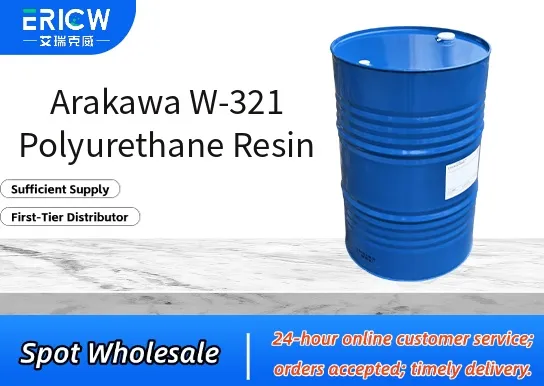
Excellent flexibility and impact resistance at low temperatures.
Superior abrasion and chemical resistance, including against hydrocarbons and mild solvents.
Fast room-temperature curing without requiring external heat or catalysts.
Low viscosity for easy processing, mixing, and application by spraying, brushing, or casting.
Good adhesion to diverse substrates including metals, plastics, and concrete.
Protective coatings for industrial flooring and garage surfaces.
Sealants and joint fillers in precast concrete construction.
Flexible encapsulants for electronic components and sensors.
Binders in specialty elastomeric composites and vibration-damping materials.
Base resin for high-performance polyurethane adhesives and structural bonding systems.
| Chemical Type | Aromatic polyether-based polyurethane prepolymer |
| Product Form | Clear to light amber viscous liquid |
| Appearance | Homogeneous, transparent, free of gel or sediment |
| Viscosity (25°C) | 1,800–2,200 mPa·s |
| Isocyanate Content (NCO %) | 4.2–4.6% |
| Specific Gravity (25°C) | 1.08–1.12 g/cm³ |
| Shelf Life (unopened, 15–25°C) | 12 months |
| Storage Conditions | Keep tightly sealed under dry nitrogen; avoid moisture exposure |
Q1: What is the primary function of Arakawa W-321 in polyurethane formulations?
A: Arakawa W-321 functions as a reactive polyurethane resin modifier, primarily used to enhance crosslink density, improve mechanical strength, and increase chemical resistance in thermosetting PU systems such as coatings, adhesives, and elastomers.
Q2: Is Arakawa W-321 compatible with both aromatic and aliphatic isocyanate systems?
A: Yes, W-321 demonstrates broad compatibility with common aromatic (e.g., MDI, TDI) and aliphatic (e.g., HDI, IPDI) isocyanates, making it suitable for applications requiring either high reactivity or UV stability depending on formulation goals.
Q3: How should Arakawa W-321 be incorporated into a typical PU formulation?
A: It is typically added during the prepolymer stage or blended with the polyol component prior to isocyanate addition. Thorough mixing under dry, inert conditions is recommended to ensure homogeneity and avoid premature reaction.
Q4: Does Arakawa W-321 require special handling or storage conditions?
A: Yes — it should be stored in tightly sealed containers under dry, nitrogen-purged conditions at ambient temperature. Exposure to moisture, heat, or air over extended periods may lead to viscosity increase or gelation due to its reactive hydroxyl functionality.
Contact With Us:
E-mail: wangxingqiang@ericwchem.com
Have a Questions? Call Us:
Add:
Building A1, Jiete Industrial Park, Huangpu District, Guangzhou City, Guangdong Province, China