English
 Español
 tiếng việt
 русский
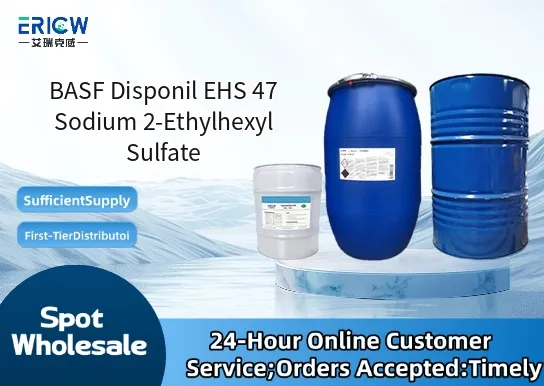
Highly effective anionic surfactant with excellent wetting and emulsifying performance in aqueous systems.
Low foaming profile, making it suitable for high-shear and industrial cleaning applications.
Good compatibility with electrolytes and hard water, maintaining stability across a broad pH range (pH 5–9).
Readily biodegradable under aerobic conditions, supporting sustainable formulation goals.
Non-irritating to skin in diluted use concentrations, contributing to improved occupational safety profiles.
Industrial and institutional (I&I) hard-surface cleaners, including floor, tile, and stainless-steel cleaners.
Automotive and metalworking cleaning formulations requiring low-foam, high-rinsability surfactants.
Agrochemical adjuvants for improving spray droplet spreading and active ingredient uptake.
Textile pre-treatment baths for scouring and desizing of synthetic and blended fabrics.
Specialty maintenance products such as engine degreasers and equipment wash solutions.
| Chemical Type | Sodium alkyl sulfate (branched C8) |
| Product Form | Pale yellow to amber viscous liquid |
| Active Content (as supplied) | ~47 wt.% (typical) |
| pH (1% aqueous solution, 20°C) | 6.5 – 8.0 |
| Density (20°C) | 1.03 – 1.07 g/cm³ |
| Solubility in Water | Complete miscibility at room temperature |
| Primary Applications | Wetting agent, emulsifier, and low-foam detergent builder |
| Regulatory Compliance | REACH registered; compliant with EU Detergents Regulation (EC No. 648/2004); non-CLP classified for skin/eye irritation at recommended use levels |
| Common Compatible Systems | Suitability |
| Nonionic surfactants (e.g., alcohol ethoxylates) | Highly Recommended – Synergistic wetting and foam control in mixed systems |
| Alkaline builders (e.g., sodium carbonate, sodium silicate) | Highly Recommended – Stable performance up to pH 10.5 in formulated cleaners |
| Cationic polymers (e.g., polyquaterniums) | Not Recommended – Risk of precipitation due to ionic incompatibility |
| Enzymes (proteases, amylases) | Recommended – Compatible in neutral-to-mildly alkaline enzyme-based cleaners when added post-blend |
| Chelating agents (e.g., GLDA, sodium gluconate) | Suitable – Enhances performance in hard water without destabilizing micelles |
Q1: What is the CAS Registry Number for Disponil EHS 47?
A: The CAS number for sodium 2-ethylhexyl sulfate is 338-63-4. Note that Disponil EHS 47 is a commercial grade containing ~47% active material in aqueous solution.
Q2: What is the typical usage concentration in industrial cleaning formulations?
A: Recommended dosage ranges from 1–8 wt.% in final formulations, depending on soil type and required wetting speed; optimal performance is often achieved at 3–5 wt.% in hard-surface cleaners.
Q3: How does Disponil EHS 47 compare to linear alkyl sulfates (LAS) in terms of biodegradability and foaming?
A: Disponil EHS 47 exhibits faster primary biodegradation than LAS due to its branched 2-ethylhexyl chain, and delivers significantly lower foam volume and persistence—critical for spray-and-rinse and high-pressure cleaning systems.
Q4: Is Disponil EHS 47 compliant with food-contact surface regulations?
A: Disponil EHS 47 is not approved for direct food-contact applications under FDA 21 CFR or EC 1935/2004. It may be used in non-rinse-required food plant cleaners only where validated removal protocols are in place and local regulatory approval is obtained.
Q5: Does Disponil EHS 47 exhibit migration or extraction concerns in polymer-based packaging or coatings?
A: Due to its ionic nature and high water solubility, Disponil EHS 47 shows negligible migration into hydrophobic polymers (e.g., PE, PP) or cured coatings; it is not intended for incorporation into final packaging matrices.
Contact With Us:
E-mail: wangxingqiang@ericwchem.com
Have a Questions? Call Us:
Add:
Building A1, Jiete Industrial Park, Huangpu District, Guangzhou City, Guangdong Province, China