English
 Español
 tiếng việt
 русский
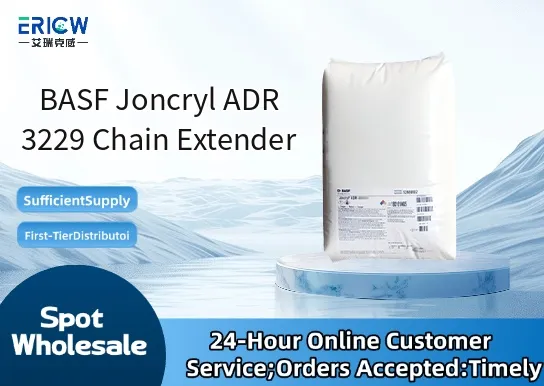
Highly efficient epoxy-functional chain extender for polyesters and polyacrylates.
Enables significant molecular weight build-up with low dosage (typically 0.2–1.0 wt%).
Improves melt strength, melt viscosity, and process stability in extrusion and injection molding.
Compatible with both virgin and recycled PET, PLA, and other condensation polymers.
Non-volatile, thermally stable up to 280 °C, minimizing odor and plate-out during processing.
Enhancement of recycled PET (rPET) for food-contact packaging and thermoformed trays.
Molecular weight restoration in post-consumer PLA for durable biopolymer applications.
Viscosity control in engineering thermoplastics for extruded profiles and blow-molded containers.
Stabilization of reactive extrusion processes involving polyester-based hot-melt adhesives.
| Chemical Type | Epoxy-functional styrene-acrylic copolymer |
| Product Form | Pellets |
| Appearance | Off-white to light yellow free-flowing pellets |
| Primary Applications | Polyester & polylactide (PLA) chain extension, rPET upcycling, reactive compounding |
| Key Features | Low volatility, high reactivity toward carboxyl/hydroxyl end groups, excellent dispersion |
| Benefits | Improved mechanical performance, enhanced melt elasticity, reduced gel formation |
| Storage Conditions | Store in original sealed packaging at 5–30 °C; protect from moisture |
Q1: What is the primary function of Joncryl ADR 3229 in polymer systems?
A: Joncryl ADR 3229 is a multifunctional epoxy-functionalized chain extender designed to increase molecular weight and improve melt strength, viscosity, and mechanical performance—particularly in recycled or degraded polyesters, polyacrylates, and other condensation polymers.
Q2: Which polymer types are most commonly modified using this chain extender?
A: It is widely used with PET, PBT, PLA, and acrylic-based resins—especially in applications involving post-consumer or post-industrial recycling where chain scission has reduced molecular weight and processability.
Q3: How is Joncryl ADR 3229 typically incorporated into a formulation?
A: It is generally added during melt compounding—either directly into the extruder feed throat or via side feeding—and reacts in situ under typical processing temperatures (220–280 °C), requiring no additional catalysts or curing steps.
Q4: Does this chain extender affect thermal stability or color development during processing?
A: When processed within recommended temperature and residence time windows, Joncryl ADR 3229 exhibits good thermal stability and minimal yellowing tendency—though extended exposure to high heat or moisture may influence color, as with many epoxy-functional additives.
Q5: Is Joncryl ADR 3229 compatible with common additives such as stabilizers, fillers, or impact modifiers?
A: Yes—it is generally compatible with standard polymer additives including phosphite antioxidants, hindered phenols, glass fibers, and elastomeric impact modifiers, though compatibility should be verified experimentally for specific formulations due to its reactive functionality.
Contact With Us:
E-mail: wangxingqiang@ericwchem.com
Have a Questions? Call Us:
Add:
Building A1, Jiete Industrial Park, Huangpu District, Guangzhou City, Guangdong Province, China