English
 Español
 tiếng việt
 русский
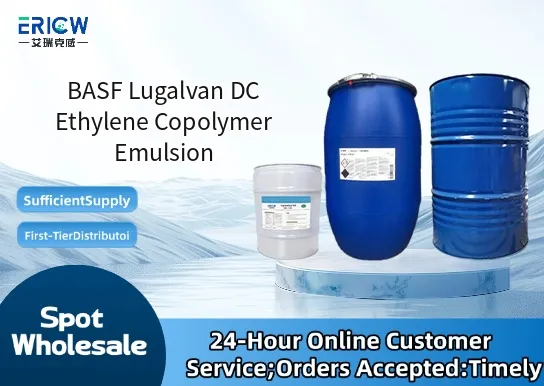
High-solids, low-VOC aqueous emulsion based on ethylene–vinyl acetate (EVA) copolymer technology.
Excellent film-forming capability with good flexibility, toughness, and adhesion to diverse substrates including paper, board, and plastics.
Enhanced water resistance and heat sealability after drying, supporting demanding packaging performance requirements.
Stable rheology and freeze-thaw stability for reliable handling in industrial coating and laminating processes.
Designed for compatibility with water-based inks, coatings, and barrier formulations without compromising clarity or process efficiency.
Water-based barrier coatings for food-grade paper and paperboard packaging (e.g., cups, trays, wrappers).
Heat-sealable topcoats in flexible laminates for snack and confectionery packaging.
Adhesive primers for metallized PET or aluminum foil lamination systems.
Functional overprint varnishes requiring grease and moisture resistance in corrugated and folding carton applications.
Base binder in sustainable, PE-replacement coating formulations for recyclable mono-material packaging.
| Chemical Type | Ethylene–vinyl acetate (EVA) copolymer emulsion |
| Product Form | Aqueous dispersion (non-ionic) |
| Appearance | Opaque white liquid, homogeneous, slight characteristic odor |
| Solids Content (wt. %) | 50.0 ± 1.0% |
| pH (25 °C) | 4.5 – 5.5 |
| Viscosity (mPa·s, Brookfield RVT, spindle #3, 20 rpm, 23 °C) | 150 – 400 |
| Minimum Film Formation Temperature (MFFT) | ~15 °C |
| Regulatory Compliance | Compliant with EU Plastics Regulation (EU) No 10/2011 (for intended food contact); FDA 21 CFR §175.105 & §176.170 (indirect food contact) |
| Common Compatible Systems | Suitability |
| Water-based acrylic dispersions | Highly Recommended – Excellent miscibility; enhances toughness and moisture resistance in hybrid binders. |
| Starch-based coatings (cationic or oxidized) | Recommended – Requires pH adjustment and controlled addition rate; improves heat seal strength and surface integrity. |
| Cellulose derivatives (e.g., HPMC, CMC) | Suitable – Compatible at ≤15% w/w loading; may require viscosity optimization during formulation. |
| Alkali-soluble resins (ASR) | Not recommended – Risk of coagulation due to ionic incompatibility and pH sensitivity. |
Q1: What is the CAS Number for BASF Lugalvan DC?
A: The CAS Number for BASF Lugalvan DC Ethylene Copolymer Emulsion is 9003-09-2 (generic EVA emulsion CAS); product-specific batch documentation includes full compositional disclosure per REACH Annex VI.
Q2: What is the typical application dosage range in barrier coating formulations?
A: Standard dosage ranges from 15–35 g/m² dry weight depending on substrate porosity and performance targets; optimal coverage is typically achieved at 20–25 g/m² for functional food-contact barriers.
Q3: How does Lugalvan DC compare to polyethylene (PE) dispersion in terms of migration safety?
A: Unlike PE dispersions, Lugalvan DC contains no low-MW polyolefin fractions and exhibits negligible non-volatile extractables under standardized food simulants (e.g., 10% ethanol, olive oil, 3% acetic acid), confirmed per EU 10/2011 testing protocols.
Q4: Is Lugalvan DC suitable for compostable packaging applications?
A: Lugalvan DC itself is not certified as industrially compostable (EN 13432); however, it is widely used in certified compostable paper-based laminates when combined with approved biopolymers (e.g., PLA, PBAT) and applied within validated coating weights and end-of-life system parameters.
Contact With Us:
E-mail: wangxingqiang@ericwchem.com
Have a Questions? Call Us:
Add:
Building A1, Jiete Industrial Park, Huangpu District, Guangzhou City, Guangdong Province, China