English
 Español
 tiếng việt
 русский
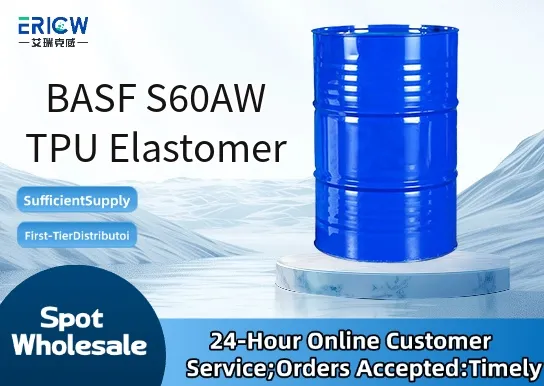
Excellent hydrolysis resistance for long-term performance in humid or aqueous environments.
Outstanding abrasion and wear resistance, ideal for dynamic mechanical components.
Good low-temperature flexibility down to –30 °C without significant loss of elasticity.
Processable via standard thermoplastic techniques including injection molding and extrusion.
Non-marking formulation suitable for applications requiring clean surface contact.
Industrial hoses and pneumatic tubing requiring high kink resistance and pressure stability.
Seals and gaskets for automotive fluid systems exposed to oils and coolants.
Conveyor belts and wear strips in material handling equipment.
Protective covers and bellows for robotics and automation actuators.
Medical device tubing compliant with ISO 10993 biocompatibility screening requirements.
| Chemical Type | Aliphatic polyester-based thermoplastic polyurethane (TPU) |
| Product Form | Pellets |
| Appearance | Off-white to light beige, free-flowing granules |
| Primary Applications | Dynamic seals, fluid handling, wear-resistant components |
| Key Features | Hydrolysis resistance, abrasion resistance, low-temp flexibility |
| Processing Method | Injection molding, extrusion, blow molding |
| Shore A Hardness (ASTM D2240) | 60 ± 2 |
| Density (ASTM D792) | 1.18–1.20 g/cm³ |
Q1: What is the primary functional role of BASF S60AW in TPU formulations?
A: BASF S60AW is a polymeric processing aid designed to improve melt flow and reduce extrusion torque during TPU compounding and shaping. It enhances surface finish, reduces die buildup, and supports stable high-speed processing without compromising mechanical performance.
Q2: Is S60AW compatible with all major TPU chemistries (e.g., polyester- and polyether-based TPUs)?
A: Yes, S60AW demonstrates broad compatibility across aromatic and aliphatic polyester- and polyether-based TPUs. Its polymeric structure minimizes phase separation and avoids adverse effects on clarity, thermal stability, or long-term hydrolytic resistance when properly dispersed.
Q3: How does S60AW affect the mechanical properties of finished TPU parts?
A: At typical use levels, S60AW has minimal impact on tensile strength, elongation at break, or hardness. It may slightly reduce modulus at higher loadings, but this is generally offset by improved process consistency and part uniformity—especially in thin-walled or complex geometries.
Q4: Can S60AW be used in applications requiring food contact or skin-safe products?
A: S60AW is not intended for direct food contact or medical device applications. While it is non-toxic and commonly used in consumer-facing TPU articles (e.g., footwear, sporting goods), regulatory compliance must be verified case-by-case based on final formulation, processing conditions, and applicable regional requirements.
Contact With Us:
E-mail: wangxingqiang@ericwchem.com
Have a Questions? Call Us:
Add:
Building A1, Jiete Industrial Park, Huangpu District, Guangzhou City, Guangdong Province, China