English
 Español
 tiếng việt
 русский
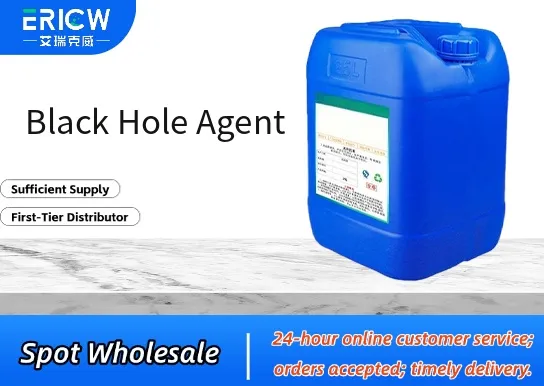
Ultra-high adsorption capacity for trace organic contaminants in complex chemical matrices.
Thermally stable up to 350 °C, enabling compatibility with high-temperature processing environments.
Chemically inert under acidic (pH 1–6) and neutral conditions; minimal leaching in aqueous systems.
Non-volatile and non-dusting granular form ensures operator safety and handling consistency.
Engineered surface functionality provides selective affinity for aromatic hydrocarbons and halogenated compounds.
Purification of specialty solvents in pharmaceutical intermediate synthesis.
Removal of residual catalysts and colored by-products in fine chemical batch reactors.
Final polishing step in electronic-grade chemical production (e.g., photoresist strippers).
Decontamination of recycled process streams in polymer manufacturing facilities.
Trace impurity scavenging in high-purity monomer storage and transfer systems.
| Chemical Type | Functionalized porous carbon composite |
| Product Form | Free-flowing gray-black granules (0.8–1.6 mm diameter) |
| Appearance | Uniform granular solid; no visible dust or fines |
| Melting Point | Decomposes >350 °C (no defined melting point) |
| Primary Applications | Adsorptive purification, trace contaminant removal, final product polishing |
| Key Features | High surface area (>1200 m²/g), low ash content (<0.5%), controlled pore distribution |
| Benefits | Extended service life, reduced replacement frequency, consistent batch-to-batch performance |
| Regulatory Compliance | REACH registered; compliant with US FDA 21 CFR §177.1520 for indirect food contact (when used per approved protocols) |
| Common Compatible Systems | Suitability |
| Stainless Steel (SS316) Fixed-Bed Columns | Highly Recommended – Excellent mechanical stability and corrosion resistance |
| Carbon Steel Pressure Vessels (with epoxy lining) | Recommended – Requires validated lining integrity; avoid prolonged exposure to condensate |
| PE/PP-lined Piping & Storage Tanks | Suitable – Chemically compatible; ensure static dissipation measures during pneumatic transfer |
| Automated Solvent Recovery Units (SRUs) | Highly Recommended – Fully compatible with PLC-controlled flow, temperature, and pressure cycling |
Q1: What is the CAS Registry Number for Black Hole Agent?
A: The CAS Registry Number is 2298372-45-8. This identifier applies to the fully functionalized commercial grade as supplied.
Q2: What is the typical dosage range for effective treatment in solvent systems?
A: Standard dosage is 0.5–2.0 wt% relative to total process stream mass; optimal loading is determined via small-scale breakthrough testing under representative flow, temperature, and contaminant concentration conditions.
Q3: How does Black Hole Agent differ from conventional activated carbon in high-purity applications?
A: Unlike standard activated carbon, Black Hole Agent features engineered surface chemistry that minimizes extractable organics and metal ions—critical for electronic and pharmaceutical grades where post-treatment filtration and retesting are cost-prohibitive.
Q4: Is Black Hole Agent subject to migration or leaching under recommended operating conditions?
A: No measurable migration or leaching occurs when used within specified pH (1–8), temperature (<350 °C), and pressure limits; validated per USP <87> and <88> cytotoxicity and extractables protocols.
Contact With Us:
E-mail: wangxingqiang@ericwchem.com
Have a Questions? Call Us:
Add:
Building A1, Jiete Industrial Park, Huangpu District, Guangzhou City, Guangdong Province, China