English
 Español
 tiếng việt
 русский
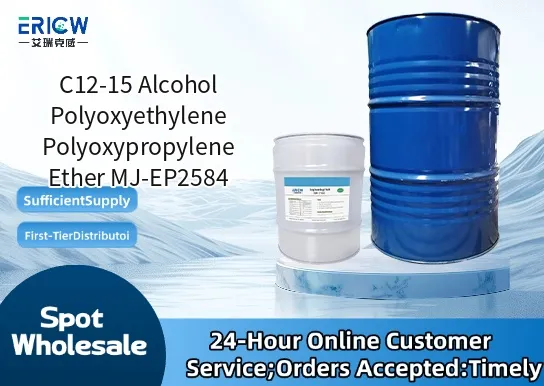
Nonionic surfactant with balanced hydrophilic-lipophilic properties (HLB ~13.5) for broad formulation flexibility.
Excellent emulsification and solubilization performance in both aqueous and oil-based systems.
Low foaming profile suitable for high-shear and low-foam industrial cleaning applications.
Enhanced thermal and hydrolytic stability due to propylene oxide capping in the polyether chain.
Biodegradable backbone structure aligned with OECD 301 series screening criteria.
Industrial hard-surface cleaners for food processing and pharmaceutical manufacturing facilities.
Emulsifier in water-dilutable metalworking fluids and cutting oil concentrates.
Stabilizer in agricultural adjuvant formulations for glyphosate and other post-emergent herbicides.
Wetting and dispersing agent in pigment concentrate production for architectural coatings.
Co-surfactant in high-efficiency laundry detergent pods for cold-water performance.
| Chemical Type | C12–C15 linear alcohol-based A-B-A type triblock nonionic surfactant (EO/PO/EO) |
| Product Form | Pale yellow to amber viscous liquid at 25°C |
| Appearance | Clear, homogeneous liquid; slight characteristic odor |
| Melting Point | Approx. –12°C to –8°C (cloud point: ~68°C in 1% aqueous solution) |
| Primary Applications | Emulsification, solubilization, wetting, and dispersion in industrial & agrochemical formulations |
| Key Features | Propylene oxide end-capping, low volatile organic compound (VOC) content, low aquatic toxicity (LC50 > 100 mg/L, Daphnia magna) |
| Benefits | Reduced formulation viscosity vs. pure EO ethers; improved rinseability and residue control |
| Regulatory Compliance | REACH registered; compliant with EU Detergents Regulation (EC) No. 648/2004; non-listed under TSCA Significant New Use Rules (SNURs) |
| Common Compatible Systems | Suitability |
| Anionic surfactants (e.g., LAS, AES) | Highly Recommended – Synergistic detergency and foam control in blended systems |
| Nonionic co-surfactants (e.g., alkylphenol ethoxylates alternatives) | Recommended – Compatible but requires compatibility testing for cloud point alignment |
| Water-based polymer dispersions (e.g., acrylic, styrene-acrylic) | Suitable – Effective stabilizer at ≤5 wt% loading; avoid prolonged high-temperature (>75°C) storage |
| Mineral oil and ester-based carrier fluids | Highly Recommended – Stable emulsions up to 30% oil phase in O/W formulations |
Q1: What is the CAS Registry Number for MJ-EP2584?
A: The CAS number is 127291-12-7 — assigned to the defined C12–C15 alcohol ethoxylate/propoxylate ether composition per IUPAC naming conventions.
Q2: What is the recommended usage level in industrial cleaner formulations?
A: Typical dosage ranges from 2–8 wt% depending on soil type and water hardness; optimal performance observed at 4–6 wt% in alkaline (pH 10–11.5) hard-surface cleaners.
Q3: How does MJ-EP2584 compare to standard C12–C15 alcohol ethoxylates (e.g., MJ-EP2580)?
A: MJ-EP2584 features PO end-capping, delivering superior low-temperature stability, reduced crystallinity, lower aqueous surface tension ( 32 mN/m at 0.1%) and enhanced resistance to electrolyte-induced phase separation.
Q4: Is MJ-EP2584 compliant with FDA 21 CFR §173.370 for indirect food contact applications?
A: Yes — MJ-EP2584 meets the compositional and purity requirements of FDA 21 CFR §173.370 for use as a defoamer/emulsifier in equipment cleaning agents where incidental food contact may occur (max. residual limit: 0.5 ppm).
Q5: Has migration or extraction been evaluated in polymer packaging contact studies?
A: Migration testing per EU 10/2011 was conducted in PET and HDPE simulants (10% ethanol, 3% acetic acid, olive oil) at 40°C for 10 days — total extractables <0.01 mg/dm², well below the overall migration limit (OML) of 10 mg/dm².
Contact With Us:
E-mail: wangxingqiang@ericwchem.com
Have a Questions? Call Us:
Add:
Building A1, Jiete Industrial Park, Huangpu District, Guangzhou City, Guangdong Province, China