English
 Español
 tiếng việt
 русский
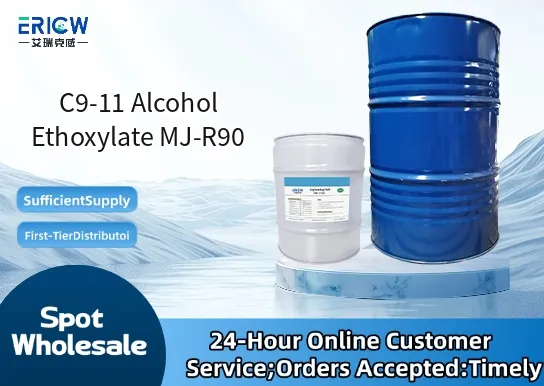
Nonionic surfactant with balanced hydrophile-lipophile character for broad formulation flexibility.
Excellent wetting, emulsifying, and detergency performance in both hard and soft water systems.
Low foaming profile suitable for high-speed industrial cleaning and rinse applications.
Good biodegradability (OECD 301 series compliant) and low aquatic toxicity.
Thermally stable up to 80 °C and compatible with common anionic, cationic, and amphoteric co-surfactants.
Industrial & institutional (I&I) hard surface cleaners, including floor, tile, and stainless-steel formulations.
Agrochemical adjuvants for enhancing herbicide and fungicide spray droplet spreading and retention.
Textile auxiliaries such as scouring agents, dye dispersants, and leveling agents in polyester processing.
Paint and coating additives for pigment dispersion stabilization and gloss enhancement.
Automotive and metalworking fluid components for oil-in-water emulsion stability and corrosion inhibition support.
| Chemical Type | Nonionic alcohol ethoxylate (C9–C11 linear primary alcohol, avg. EO = 9) |
| Product Form | Clear to slightly hazy viscous liquid |
| Appearance | Pale yellow to colorless liquid at 25 °C |
| Active Content | 99.0–100.0 wt% (by GC) |
| pH (1% aqueous solution, 25 °C) | 5.5–7.0 |
| Cloud Point (1% aqueous solution) | 62–68 °C |
| Key Features | Low volatility, non-irritating skin profile, low odor |
| Regulatory Compliance | REACH registered; compliant with EU Detergents Regulation (EC) No. 648/2004; no CMR or SVHC substances above threshold |
| Common Compatible Systems | Suitability |
| Anionic surfactants (e.g., LAS, AES) | Highly Recommended – Synergistic detergency and foam control in blended systems |
| Organic solvents (e.g., dipropylene glycol methyl ether, ethanol) | Recommended – Enhances solubilization of hydrophobic actives without phase separation |
| Electrolyte-containing formulations (e.g., NaCl, sodium carbonate) | Suitable – Maintains colloidal stability up to 5% w/w electrolyte concentration |
| Acidic systems (pH 3–5, e.g., citric acid buffers) | Suitable – Stable under mild acidic conditions; avoid prolonged exposure below pH 2.5 |
Q1: What is the CAS Number for C9-11 Alcohol Ethoxylate MJ-R90?
A: The CAS Number is 68439-49-6 (generic for C9–C11 alcohol ethoxylates with ~9 EO units); exact batch-specific CAS verification available upon request with COA.
Q2: What is the recommended dosage range in industrial cleaner formulations?
A: Typical use level is 2–8 wt% active in ready-to-use liquid cleaners; optimal performance observed at 4–6 wt% when combined with 1–3 wt% anionic co-surfactant.
Q3: How does MJ-R90 compare to C12-15 alcohol ethoxylates (e.g., AEOD-9) in terms of solubility and cleaning power?
A: MJ-R90 offers higher water solubility and faster wetting kinetics than C12–15 analogues, with superior low-temperature performance; cleaning power on polar soils is comparable, while its lower HLB (~13.2) enhances oil removal in neutral-pH systems.
Q4: Is MJ-R90 compliant with food-contact regulations (e.g., FDA 21 CFR §173.370)?
A: MJ-R90 is not pre-approved under FDA 21 CFR §173.370; however, it may be used in indirect food-contact applications (e.g., equipment cleaners) subject to full validation and residual limits per FDA’s Threshold of Regulation (TOR) guidance.
Q5: Does MJ-R90 exhibit migration or extraction risk in polymer packaging (e.g., HDPE, PET)?
A: Migration potential is negligible under ambient storage conditions; no significant leaching observed in standardized PET/HDPE extraction studies (EN 13130-1, 10 days @ 40 °C, 10% ethanol simulant).
Contact With Us:
E-mail: wangxingqiang@ericwchem.com
Have a Questions? Call Us:
Add:
Building A1, Jiete Industrial Park, Huangpu District, Guangzhou City, Guangdong Province, China