English
 Español
 tiếng việt
 русский
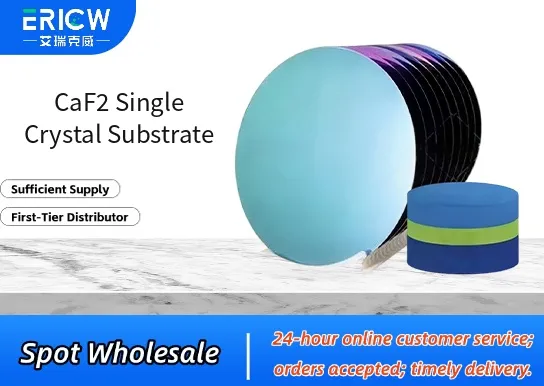
Exceptional UV transparency down to 125 nm with minimal absorption and scattering.
High thermal stability and low thermal expansion coefficient (18.9 × 10⁻⁶/K at 25 °C).
Chemically inert against most acids (except hot concentrated H₂SO₄ and HF), bases, and organic solvents.
Low birefringence and excellent optical homogeneity for precision lithography and spectroscopy.
Available in high-purity grades (≥99.99% trace metal basis) with controlled dislocation density (<500 cm⁻²).
Excimer laser optics (ArF 193 nm, F₂ 157 nm) for semiconductor photolithography steppers and scanners.
UV-grade windows, prisms, and lenses in analytical instrumentation (e.g., UV-VIS spectrophotometers, fluorescence microscopes).
Substrates for epitaxial growth of wide-bandgap semiconductors (e.g., AlN, GaN) under UHV conditions.
Calibration standards in deep-UV metrology and synchrotron beamline optics.
Optical components in space-based telescopes and planetary spectrometers requiring radiation-hardened materials.
| Chemical Type | Calcium fluoride (CaF₂), single crystal |
| Product Form | Polished wafers, blanks, or custom-cut substrates (round, rectangular, or shaped) |
| Appearance | Colorless, transparent, optically clear; no visible inclusions or striations |
| Melting Point | 1418 °C |
| Primary Applications | Deep-UV optical substrates, laser transmission elements, analytical optics |
| Key Features | High UV transmittance (>90% @ 193 nm), low OH⁻ content (<1 ppm), <100 arcsec wavefront distortion |
| Benefits | Enables high-resolution patterning, reduces thermal lensing, extends component lifetime in high-power UV systems |
| Regulatory Compliance | RoHS compliant; meets ISO 10110-3 surface quality standards (scratch-dig ≤ 10-5); traceable to NIST SRM 2036 for refractive index |
| Common Compatible Systems | Suitability |
| ASML NXT Lithography Scanners (ArF immersion) | Highly Recommended – Optimized for 193 nm transmission and thermal management |
| Zeiss UV Microscope Objectives (e.g., LD Epiplan-Apochromat) | Highly Recommended – Minimal chromatic aberration and high NA compatibility |
| Thermo Fisher Nicolet iS50 FTIR with UV accessory module | Recommended – Requires AR coating for optimal throughput below 200 nm |
| Edmund Optics UV Fused Silica Mounting Fixtures | Suitable – Mechanical compatibility confirmed; thermal expansion mismatch requires kinematic mounting design |
Q1: What is the CAS Registry Number for CaF₂?
A: The CAS Registry Number for calcium fluoride is 7789-75-5.
Q2: Is CaF₂ substrate suitable for use in contact with pharmaceutical or food-grade processes?
A: CaF₂ is chemically stable and non-leaching under ambient and dry conditions; however, it is not certified for direct food or pharmaceutical contact per FDA 21 CFR or EFSA regulations. It is intended for optical/industrial use only.
Q3: How does CaF₂ compare to MgF₂ and fused silica for deep-UV applications below 180 nm?
A: CaF₂ offers superior transmission below 150 nm compared to MgF₂ (cutoff ~115 nm vs. ~112 nm) and significantly better than fused silica (<180 nm cutoff). Its lower refractive index (1.43 @ 157 nm) also reduces reflection losses and improves broadband AR coating performance.
Q4: Does CaF₂ exhibit ion migration or fluoride leaching under UV irradiation or elevated temperature?
A: No measurable fluoride ion migration occurs under standard operating conditions (≤200 °C, ambient atmosphere, typical UV fluences). Accelerated testing per ASTM F2129 shows no detectable leaching (detection limit <0.1 ppb F⁻) in deionized water after 72 h at 60 °C.
Contact With Us:
E-mail: wangxingqiang@ericwchem.com
Have a Questions? Call Us:
Add:
Building A1, Jiete Industrial Park, Huangpu District, Guangzhou City, Guangdong Province, China